Safety & Rules
Why Tyres Burst in Summer in the UAE (and How to Stop It)
Most UAE tyre bursts aren't caused by heat alone. A technician ranks the real causes, from low pressure to old rubber, and how to prevent a summer blowout.
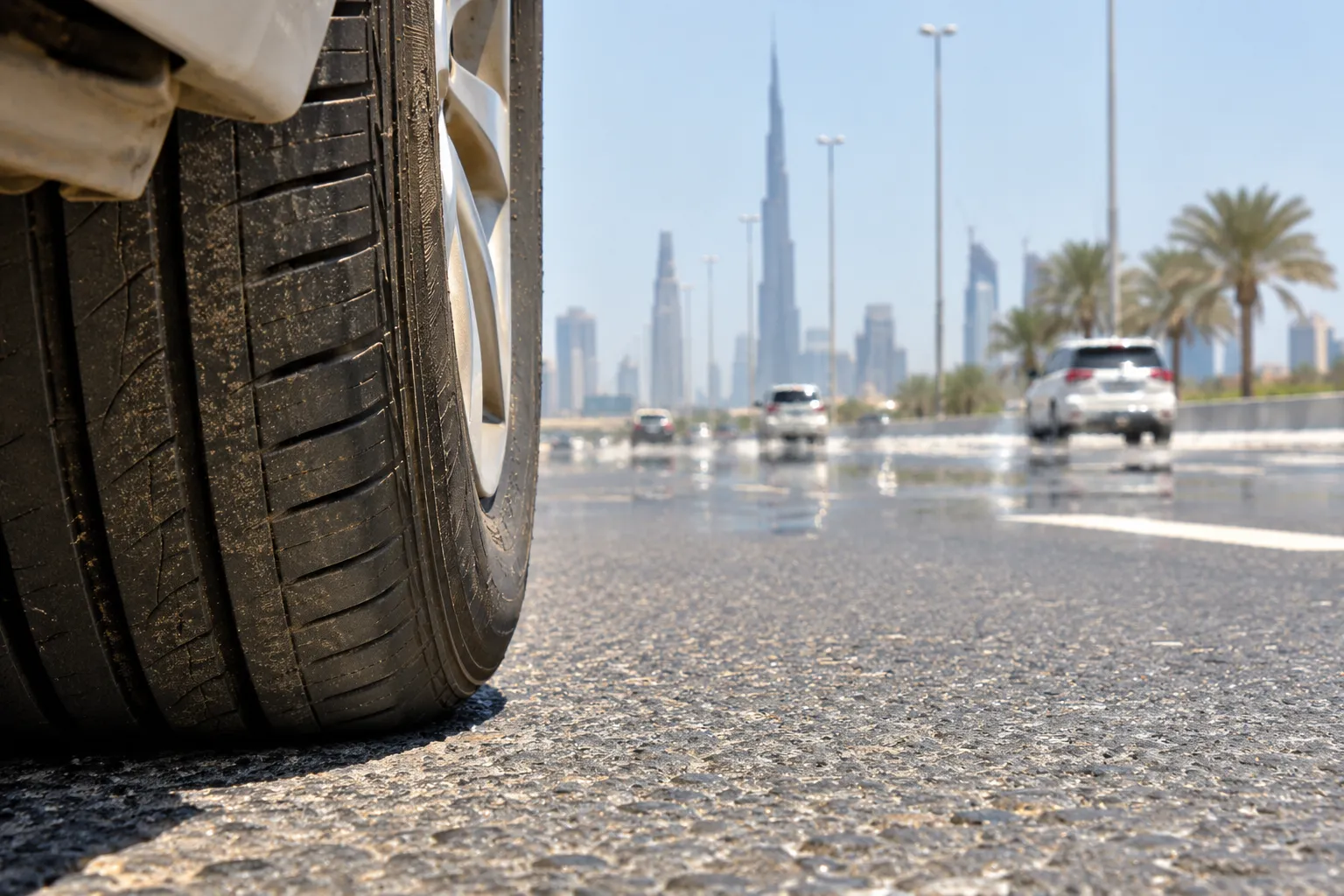
Tyres burst in the UAE summer mainly because heat makes existing problems fatal: under-inflation, overloading, old rubber and hidden impact damage. A correctly inflated, healthy tyre handles 65 °C asphalt without trouble. A tyre that’s 8 psi low, five years old or carrying a bruised sidewall can overheat at highway speed and fail within minutes.
Key takeaways
- Under-inflation is the number one cause of summer bursts I see, not over-inflation.
- Pressure should be set cold, in the morning. Don’t let air out of a hot tyre.
- Old tyres (four to five years from manufacture) and tyres with sidewall damage are the next biggest risks.
- Overloaded family cars on long afternoon highway runs are the classic burst scenario.
What actually happens when a tyre bursts
A tyre carrying the car’s weight flexes every time it rolls through the contact patch, hundreds of times a minute at highway speed. That flexing makes heat. A correctly inflated tyre flexes a designed amount and sheds that heat into the air and road.
When the tyre is soft, the sidewall flexes far more. Heat builds faster than it can escape. On a 47 °C afternoon, with the road surface at 60–70 °C, there’s very little cooling available. The rubber and the bonds between its internal layers weaken. Eventually the tread separates or the sidewall tears, and the air escapes all at once. That’s the bang.
So heat is the trigger, but something else nearly always loads the gun.
The causes, ranked by what I see on call-outs
1. Under-inflation
By a long way the most common. In my call-outs, most burst tyres I can still measure on the same axle are well below the recommended pressure. Causes include slow punctures nobody noticed, a leaking valve, a bent rim that seeps air, or simply not checking for months.
What makes it worse in the UAE is the myth that you should run lower pressure in summer. People see 38 psi on a hot afternoon, think it’s dangerous, and let air out. The next morning that tyre is at 28 psi cold, and it’s driven to Abu Dhabi at 140 km/h. The summer tyre pressure guide covers the correct approach in detail.
2. Age
Rubber dries and hardens with heat and UV. By year four or five, even a tyre with deep tread can have internal cracking you can’t see. The UAE’s five-year limit from the manufacture date exists for this reason. Check yours with our guide to the DOT date code.
3. Overloading
Summer is travel season: seven people in the SUV, luggage on the roof, a trip to Oman or Fujairah. Every tyre has a load index, and many family cars run close to it when fully loaded. Some manufacturers specify higher pressures for full load; look for a second column on the door-jamb placard.
4. Hidden impact damage
A pothole, kerb or speed bump hit months ago can break internal cords without leaving a visible mark. Add heat, and that weak spot lets go. A visible bubble is the obvious warning. Our article on sidewall bulges explains how to spot one.
5. Worn tread
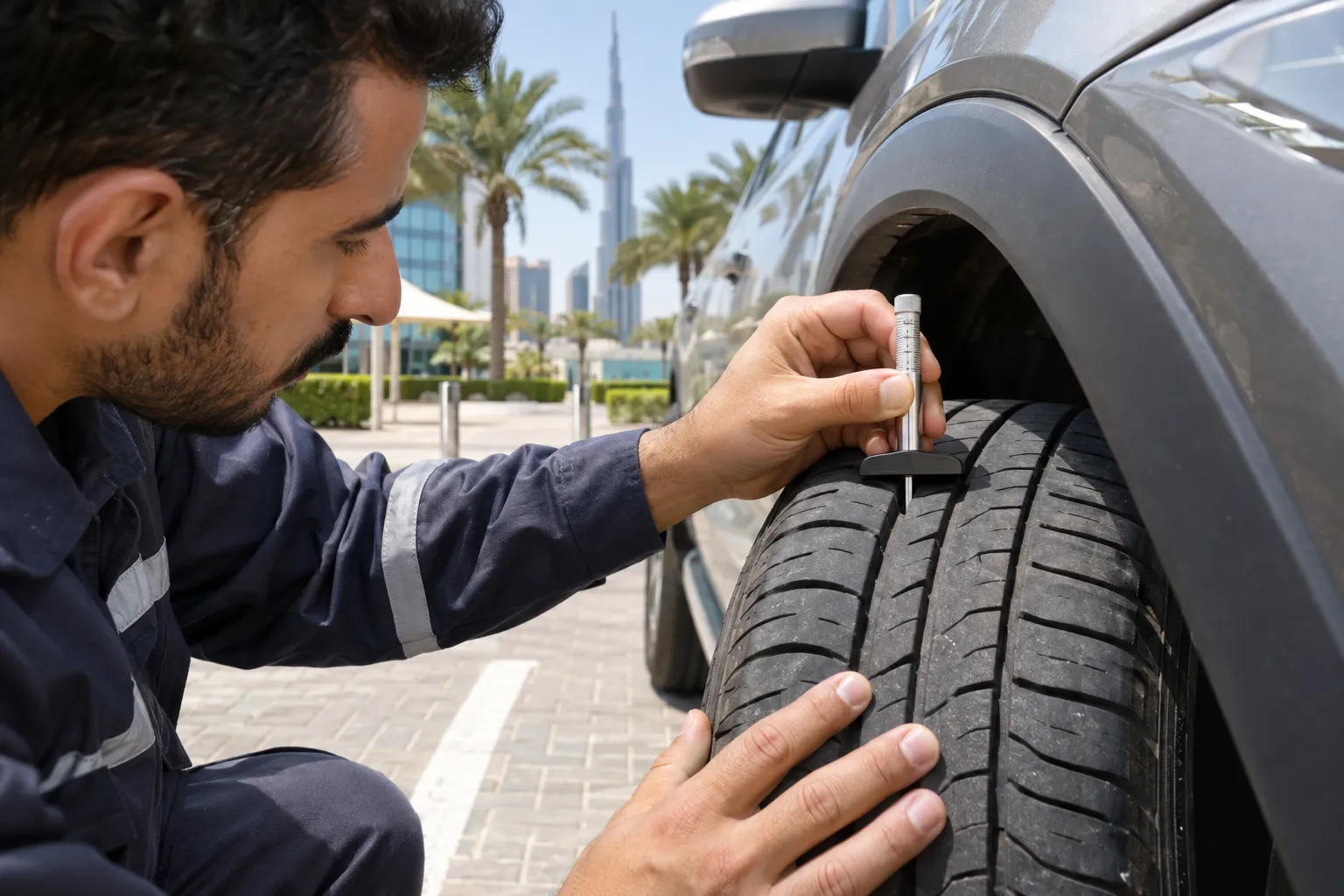
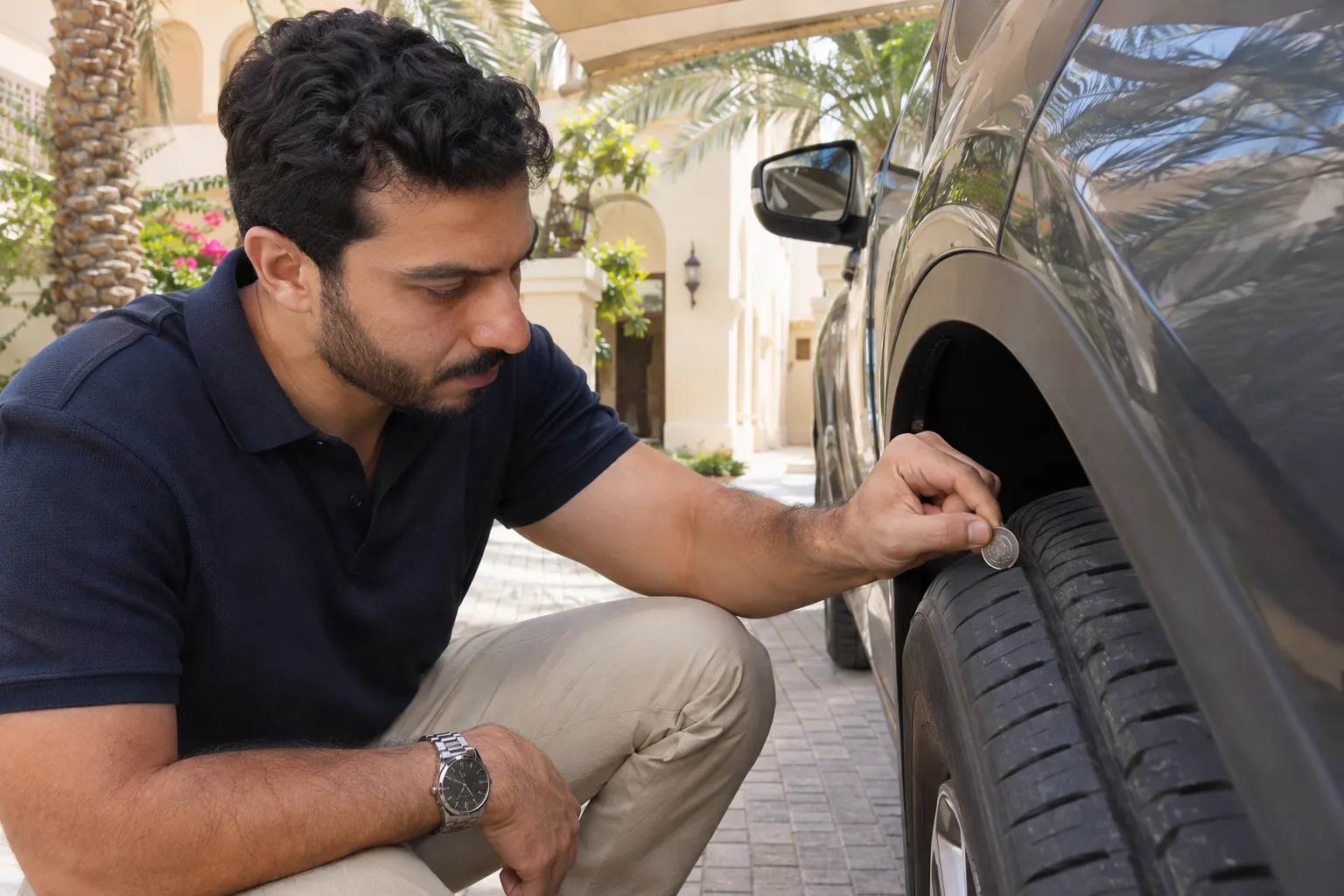
Thin tread means less rubber between the road and the casing, and more chance of punctures and heat damage. A tyre at 2 mm in July is a bigger risk than the same tyre in January.
6. Wrong tyre for the car
A tyre with a lower speed or load rating than specified, often fitted to save money, can overheat at speeds it was never designed for. Check the rating against the placard.
7. Repairs in the wrong place
A plug near the shoulder or a botched repair can fail under heat. Proper repairs are only made in the centre tread area. See plug vs patch for what a correct repair looks like.
Which cars I see bursts on most
In my own call-outs, the pattern is consistent. Large family SUVs and seven-seaters loaded for a trip, older sedans used for long daily commutes between emirates, and pickups carrying more weight than their tyres are rated for. Low-mileage cars are another group: tyres with plenty of tread but six or seven years old, because the owner only drove to the mall and back. Sports cars on low-profile tyres burst less often, mostly because their owners check pressures more.
Numbers that matter
| Condition | Typical value | Why it matters |
|---|---|---|
| Asphalt temperature, Dubai midsummer afternoon | 60–70 °C | Little cooling for the tyre |
| Pressure rise from cold to hot | 3–6 psi | Normal; don’t release it |
| Pressure rise per ~5–6 °C | About 1 psi | Morning vs afternoon readings differ |
| Natural pressure loss | Around 1–2 psi per month | Unchecked tyres drift low over a summer |
| UAE tyre age limit | 5 years from manufacture | Old rubber can’t cope with heat |
| Minimum legal tread | 1.6 mm | Replace well before this in summer |
Warning signs before a burst
Bursts sometimes give a warning. Pull over safely and check if you notice:
- The car pulling to one side or feeling vague at speed
- A new vibration or a rhythmic thumping noise
- The TPMS light coming on. Don’t ignore it. Our guide to the TPMS warning light explains what each signal means.
- A tyre that looks visibly lower than the others
- A smell of hot rubber after a highway run
If it happens while you’re driving
- Hold the wheel firmly with both hands. The car will pull hard toward the burst side.
- Don’t brake hard. Lift off the accelerator gently and let the car slow down.
- Keep the car straight until speed is low, then signal and move to the right.
- Stop somewhere safe, hazards on, and get everyone out on the side away from traffic.
The full roadside procedure is in our guide to a flat tyre on the highway.
The day it went wrong
Two summers ago I attended a burst on the E11 near Ghantoot at about 3 in the afternoon. Family SUV, five passengers, roof box, heading back from Abu Dhabi. The rear left tyre had shredded. The rear right, still intact, was at 24 psi cold-equivalent against a placard of 35 for a full load, and its DOT date showed it was coming up on five years. The driver told me he’d let air out the week before because a friend said tyres “expand in the heat.” Every cause on this list was there at once.
Summer tyre myths I hear every week
“Fill tyres with less air in summer so they don’t burst.” This is backwards. The tyre’s recommended pressure already allows for the heat rise. Lower pressure means more flexing, which means more heat. Set the placard pressure, cold.
“Nitrogen stops bursts.” It slows pressure loss slightly but doesn’t change how a tyre behaves when it’s low, old or damaged. Our nitrogen vs air comparison explains what it does and doesn’t do.
“Bursts only happen to cheap tyres.” I’ve seen premium tyres fail because they were under-inflated or past their age. Brand doesn’t save a neglected tyre.
“A tyre with deep tread is safe.” Not if it’s six years old or has a bruised sidewall. Tread depth is only one of several checks.
“Driving fast causes bursts.” Speed adds heat, so it raises the risk, but a healthy tyre rated for your speed handles 120–140 km/h for hours. Speed combined with low pressure and heavy load is what breaks tyres.
“Wetting tyres with water cools them down.” Splashing water on a hot tyre does nothing useful, and a sudden temperature change does the rubber no favours. If a tyre feels very hot after a drive, the answer is to check the pressure once it has cooled and find out why.
A summer tyre routine that works
| When | What to do |
|---|---|
| Every 2 weeks (May–September) | Check pressure cold, before 9 am, including the spare |
| Monthly | Look over sidewalls for bubbles, cuts and cracks; check tread depth |
| Before a long trip | Set full-load pressure, check spare, look for nails in the tread |
| After hitting a pothole or kerb hard | Check the sidewall that evening and the next morning |
| Every 10,000 km | Rotate the tyres and check balancing |
| Every year | Check DOT dates; plan replacement at four years |
A few habits also help:
- Park in shade or a covered car park when you can; UV ages the sidewalls.
- Drive a little slower on long afternoon highway runs when fully loaded.
- Don’t top up a hot tyre to a cold figure, and never deflate a hot tyre.
Book a summer tyre check
The cheapest way to avoid a burst is ten minutes with a gauge and a quick look at the sidewalls. If you’d rather have a technician do it, we check pressures free at our Al Quoz workshop and offer a full tyre inspection service at home or work. If a tyre is too old or damaged, we’ll show you why and quote a replacement.
Frequently asked questions
Should I reduce tyre pressure in summer in the UAE?
No. Set the pressure on the door placard with the tyres cold, early in the morning. Pressure rises by a few psi as the tyre heats up, and that rise is accounted for in the design. Letting air out of a hot tyre leaves it under-inflated, which is the main cause of bursts.
What time of day do most tyre bursts happen?
In our call-outs, bursts cluster in the afternoon, from about 13:00 to 17:00, when road surfaces are hottest and cars have been driven for a while. Long highway runs at that time on under-inflated tyres are the highest-risk combination.
Can a new tyre burst?
It can if it is badly under-inflated, overloaded or damaged by an impact, but it is much less likely than with an old or worn tyre. Most bursts we attend are on tyres that were already low on pressure or more than four years old.
What should I do if my tyre bursts while driving?
Hold the steering firmly, do not brake hard, let the car slow gradually in a straight line, switch on hazards and move to a safe place. Then get everyone away from traffic before dealing with the tyre.
About the author
Fazir Kamal — Fazir Kamal is a tyre technician with five years of hands-on work on UAE roads — roadside punctures on Sheikh Zayed Road at 2 a.m., run-flat fitments in DIFC basements, alignment on desert-driven Patrols. He writes and reviews the technical guides on TyrePuncture.ae.