Tyre Pressure
TPMS Warning Light: What It Means and What to Do
Tyre pressure light on? Learn what a solid vs flashing TPMS light means, how to reset it, why it comes on in UAE mornings and when a sensor needs replacing.
The TPMS warning light (a yellow horseshoe shape with an exclamation mark) means at least one tyre is significantly below its recommended pressure, usually about 20–25% low. If the light flashes for around a minute at start-up and then stays on, the monitoring system itself has a fault, often a dead sensor battery. Either way, check all four tyres with a gauge and set them cold to the figure on your door placard.
Key takeaways
- Solid light = low pressure. Flashing then solid = system fault.
- The light comes on late. By the time it shows, the tyre is already well under-inflated.
- After inflating, some cars reset automatically after a short drive; others need a button press or a reset in the menu.
- Sensor batteries can’t be changed. A dead battery means a new sensor.
Decode your TPMS light
| What you see | What it usually means | What to do |
|---|---|---|
| Solid amber light while driving | One or more tyres low | Slow down, stop safely, check all tyres |
| Solid light, one tyre visibly flat | Puncture or valve leak | Don’t drive on it. Fit the spare or call for help |
| Light on in the morning, off after a drive | A tyre just below the threshold when cold | Top up cold and check for a slow puncture |
| Flashing ~60–90 seconds, then solid | System fault (sensor battery, missing sensor, receiver) | Check pressures manually; book a TPMS diagnosis |
| Light on after a tyre change | Sensor damaged, not relearned, or wheels without sensors | Relearn or replace sensors |
| Dashboard shows a pressure for each tyre | Direct TPMS with individual readouts | Read which tyre is low, then check with a gauge |
On cars with a digital display, you may also see a message like “Check tyre pressure” or a car outline with one wheel highlighted.
Direct vs indirect TPMS
Your car uses one of two systems, and it changes what the light means.
Direct TPMS
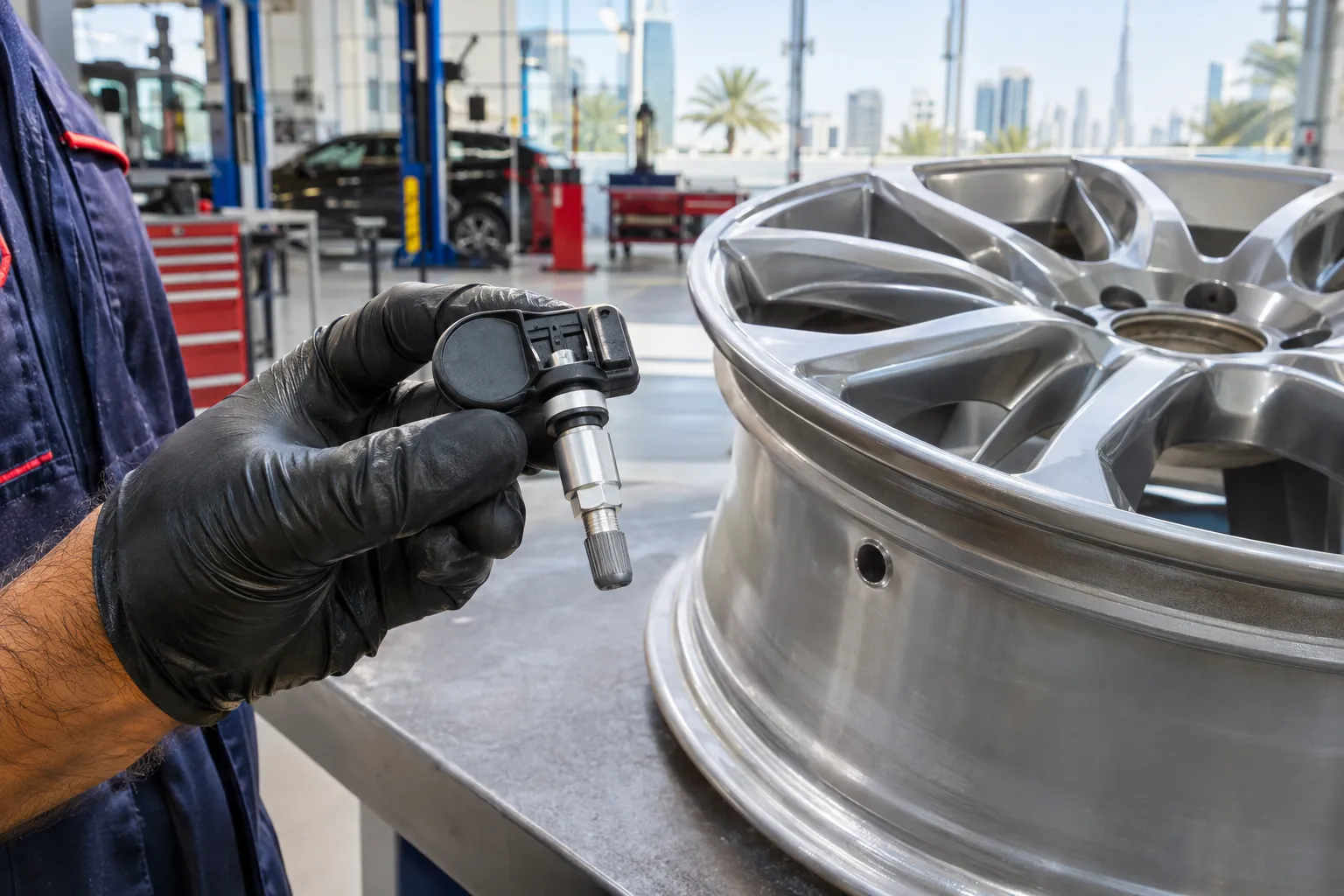
A small battery-powered sensor sits inside each wheel, usually attached to the valve. It measures pressure (and often temperature) and transmits it to the car. Many Toyota, Nissan, Lexus, Hyundai, Kia and American models sold in the UAE use direct systems (some GCC-spec base models have no TPMS at all), and many show individual pressures on the dash.
Indirect TPMS
No sensors in the wheels. The car uses the ABS wheel-speed sensors to spot a tyre that’s rotating faster than the others, which happens when it’s under-inflated and slightly smaller. Some Volkswagen group, Mazda and other European and Japanese models use this. Indirect systems must be recalibrated after you adjust pressures or change tyres, or they’ll compare against the wrong baseline.
Not sure which you have? Check your manual, or look at the valve stems. Metal or chunky valves with a nut usually mean direct sensors, though rubber-valve sensors exist too.
What to do when the light comes on
- Don’t panic, and don’t ignore it. Ease off and look for a safe stop: a petrol station, car park or quiet side road.
- Look at all four tyres. A visibly flat tyre means stop driving; fit the spare or call a mobile puncture repair van.
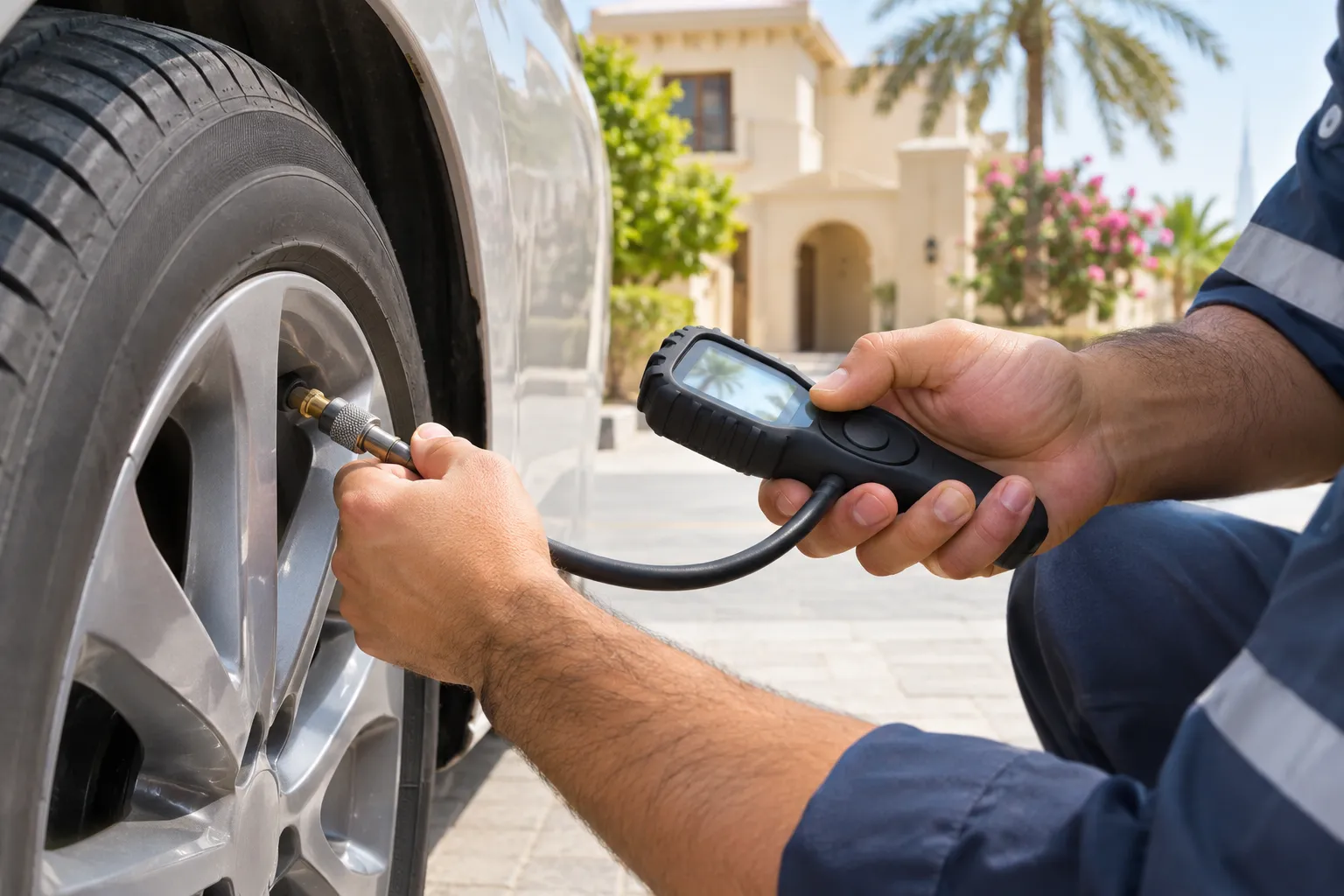
- Check pressures with a gauge. If the tyres are hot from driving, readings will be 3–6 psi higher than the cold figure. Keep that in mind.
- Inflate to the placard pressure, found on the driver’s door jamb. If the tyres are hot, aim slightly above the cold figure and re-check the next morning.
- Look for nails, screws and damage in the low tyre. A tyre that keeps losing pressure has a leak.
- Reset the system if needed (see below), then drive for 10–20 minutes so it can confirm.
If the light comes back within a day or two, you almost certainly have a slow puncture or a leaking valve. Our guide on how to fix a tyre puncture covers the options.
Why the light is common in UAE mornings
From November to March, I get more TPMS calls than in summer. The overnight temperature drop between a 34 °C afternoon and an 18 °C winter morning is enough to pull pressure down by about 3 psi. A tyre that was already a little low tips below the threshold at 7 am, then the light goes off once the tyre warms up on the drive.
The fix isn’t to ignore it because it “goes away.” Set the pressure correctly cold. The tyre pressure guide lists typical figures for common UAE cars.
In summer the opposite trap appears: drivers see high pressures on the dash in the afternoon and let air out. The light then comes on the next morning. Pressure readings on a hot afternoon are supposed to be higher.
How to reset the TPMS light
Methods vary by car. The common ones:
- Automatic: Many direct systems reset on their own after you inflate correctly and drive for 10–20 minutes above about 25 km/h.
- Reset button: Some Toyotas and Lexus have a “SET” button under the steering column or glovebox. With the tyres at the correct cold pressure, hold it until the light blinks slowly three times.
- Menu reset: Many European and Korean cars have a “Tyre pressure – Calibrate” option in the infotainment or cluster menu.
- Relearn tool: After new sensors or a wheel swap, some cars need a scan tool to teach the car each sensor’s ID and position.
Never reset an indirect system with tyres at the wrong pressure. It will learn the wrong baseline and stop warning you.
When the sensor is the problem
A flashing light usually means one of these:
- Dead battery. Sensor batteries generally last 5–10 years. Cars from around 2016–2019 are now hitting this in big numbers, and heat seems to shorten the life.
- Damaged sensor. Sensors get broken during careless tyre changes, especially when the bead breaker hits the sensor. We always mark sensor positions before removing a tyre.
- Corroded valve stem. Aluminium stems can corrode and crack. A leaking stem also causes slow pressure loss.
- Wheels without sensors. Aftermarket rims or a spare wheel fitted without a sensor will trigger a fault.
- Sensors not relearned after a tyre rotation, on cars that show individual tyre positions.
We diagnose these with a TPMS tool that reads each sensor’s ID, battery status and pressure. A replacement TPMS sensor costs AED 220–450 fitted and programmed. If one sensor has died from age, the others are usually close behind; replacing all four when you next change tyres saves a second fitting charge.
TPMS after tyre changes, rotations and new wheels
A lot of TPMS warnings start right after a visit to a tyre shop. Common reasons:
- Rotation on cars that show positions. If your dash shows a pressure for each corner, the car needs to relearn where each sensor now sits after a tyre rotation. Otherwise a low rear tyre might be reported as a front.
- Damaged sensor during fitting. The sensor sits just inside the rim at the valve. Careless use of the tyre machine can snap it. We mark the valve position and keep the bead clear of the sensor every time.
- New valve cores and seals. Metal-stem sensors use a specific nut, grommet and core. Reusing old seals can cause a slow leak that triggers the light weeks later.
- Winter and summer wheel sets. Rare in the UAE, but some owners keep a separate set of wheels for desert use. Each set needs its own sensors, programmed to the car, or the light will stay on.
- Aftermarket alloys. If you upgrade wheels, either move your sensors across or fit new programmable ones. Leaving them out means a permanent warning and no monitoring.
If the light appears within a day or two of a tyre job, go back to the shop that did the work first. It’s usually a quick fix.
Should you just ignore a faulty TPMS?
Technically the car still drives. But the TPMS is your only early warning of a slow leak at highway speed, which is exactly the situation that leads to a summer blowout. Read why tyres burst in summer and you’ll see why I don’t recommend living with a permanent warning light.
Last spring a customer drove for three months with a flashing TPMS light on a Patrol because “it’s just the sensor.” It was. It was also hiding a nail in the rear tyre that had been leaking for weeks. We found it when the tyre was at 18 psi.
Get your TPMS checked
If your light is on and the pressures look right, or it flashes at every start, bring the car to our workshop in Al Quoz or book a van. We read all four sensors, check for leaks and valve damage, replace or program sensors on the spot, and reset the system. While we’re there, a quick pressure check and top-up is free.
Frequently asked questions
Can I drive with the TPMS light on?
If the light is solid, slow down and check your tyre pressures at the next safe stop; one or more tyres is low. If it flashes for about a minute and then stays on, the system has a fault, so the tyres are not being monitored and you should check them manually until it is fixed.
How long do TPMS sensor batteries last?
Typically around 5–10 years. The battery is sealed inside the sensor, so when it dies the whole sensor is replaced. In UAE heat, we often see sensors failing toward the lower end of that range.
How much does a TPMS sensor cost in Dubai?
We fit TPMS sensors from AED 220–450 each, including programming to your car. The price depends on the car make and whether an OE or a programmable universal sensor is used.
Why does my TPMS light come on in the morning and go off later?
A tyre is sitting just below the warning threshold when cold. As you drive, it warms up, pressure rises and the light goes off. That tyre is genuinely low and needs topping up or checking for a slow puncture.
About the author
Fazir Kamal — Fazir Kamal is a tyre technician with five years of hands-on work on UAE roads — roadside punctures on Sheikh Zayed Road at 2 a.m., run-flat fitments in DIFC basements, alignment on desert-driven Patrols. He writes and reviews the technical guides on TyrePuncture.ae.