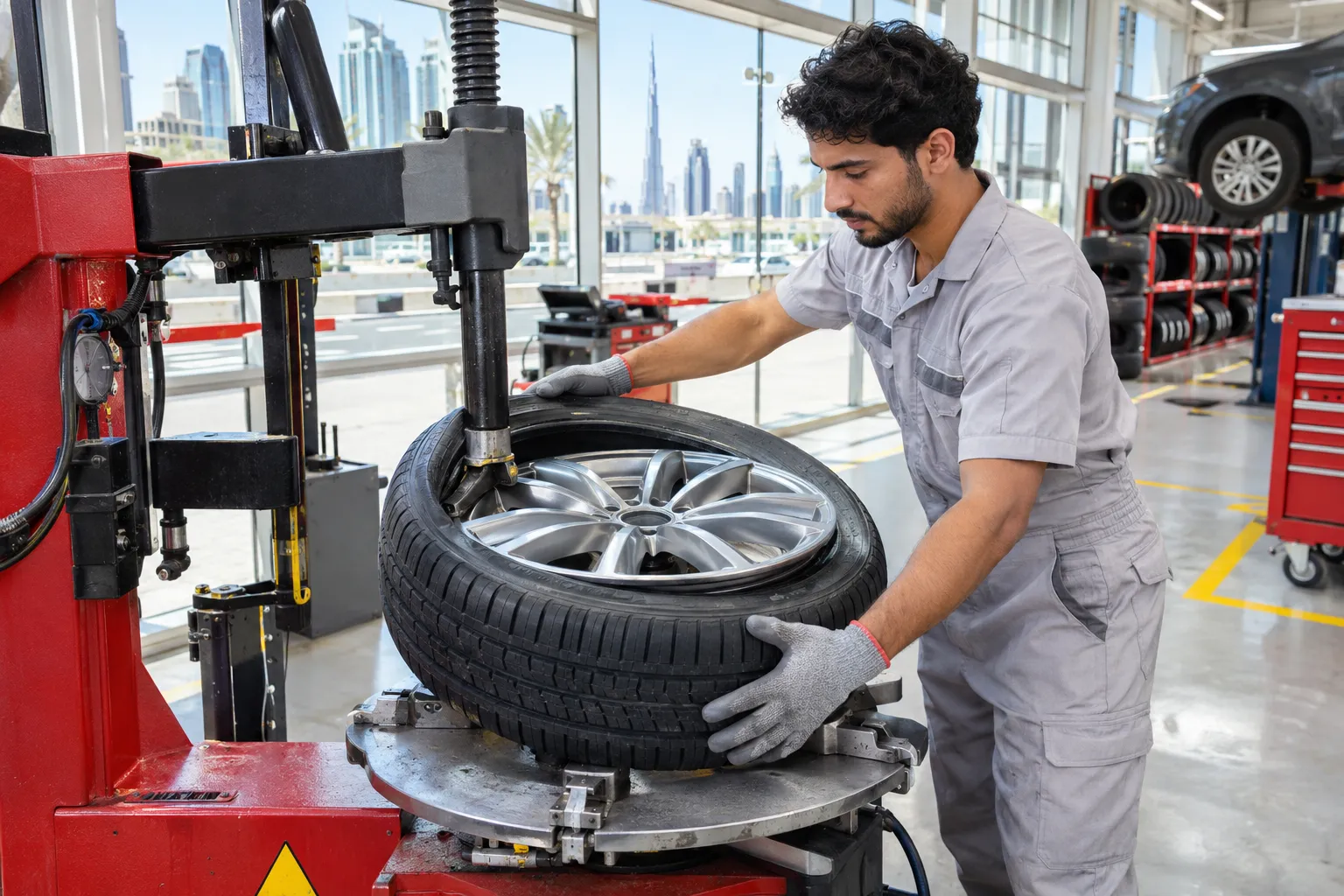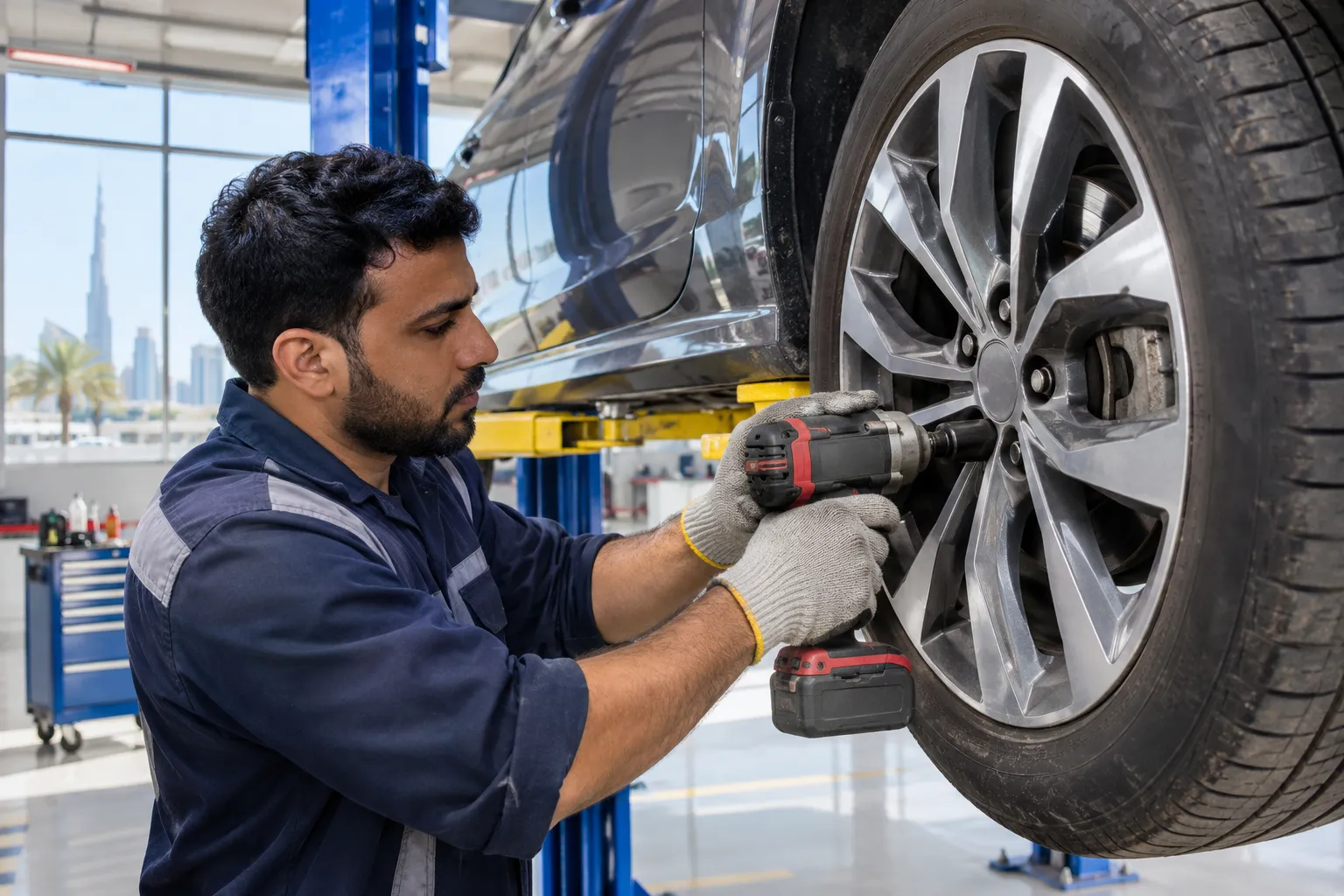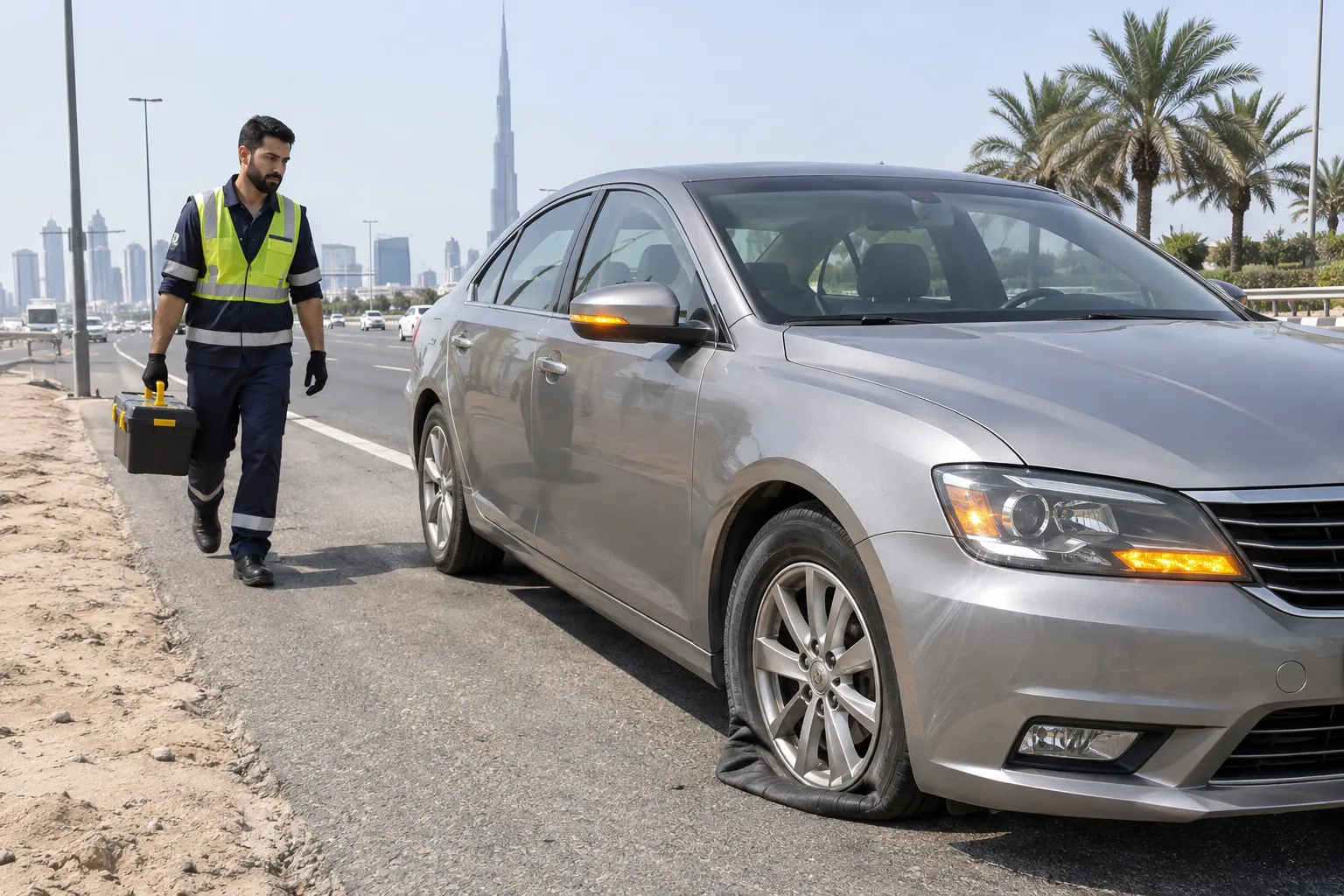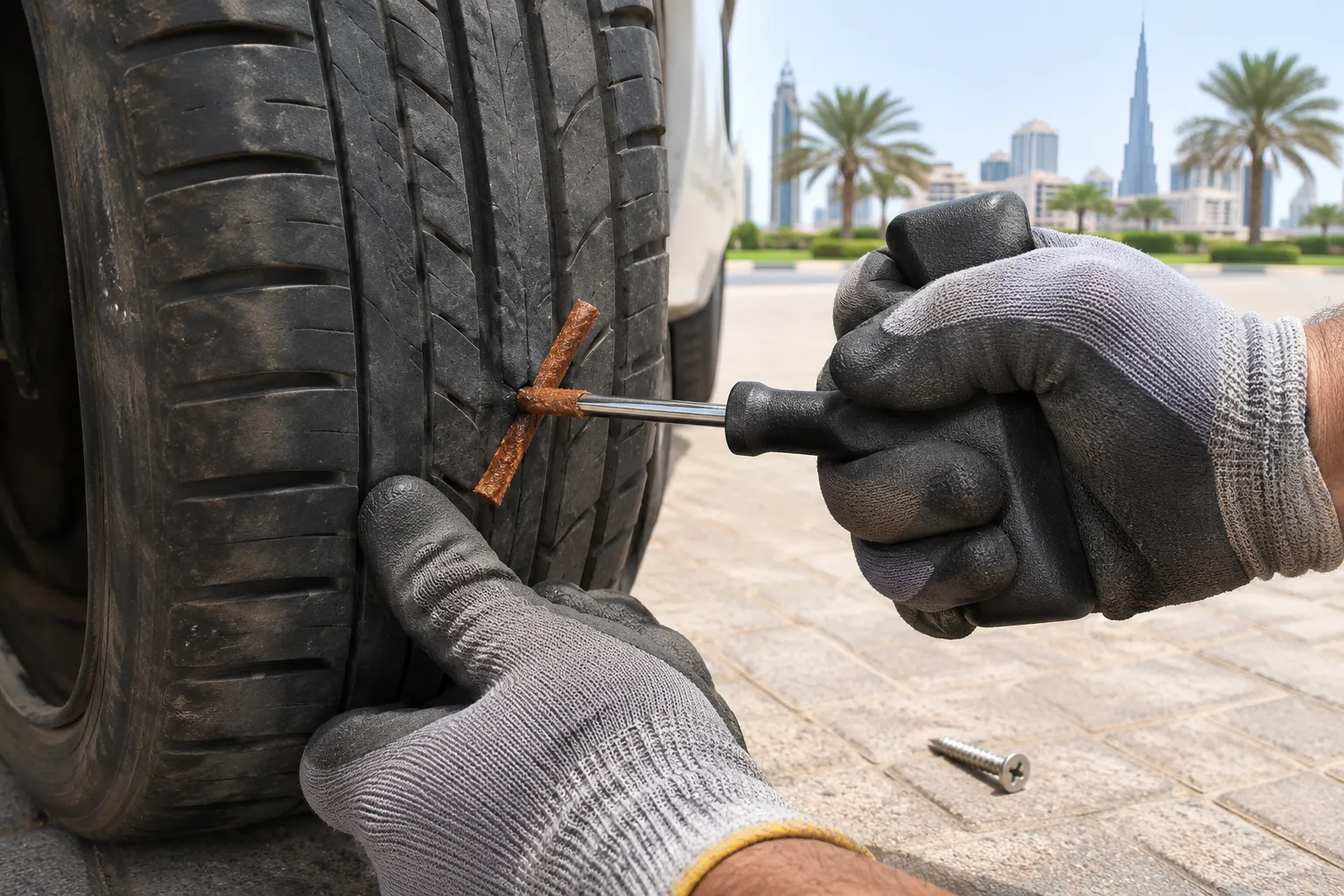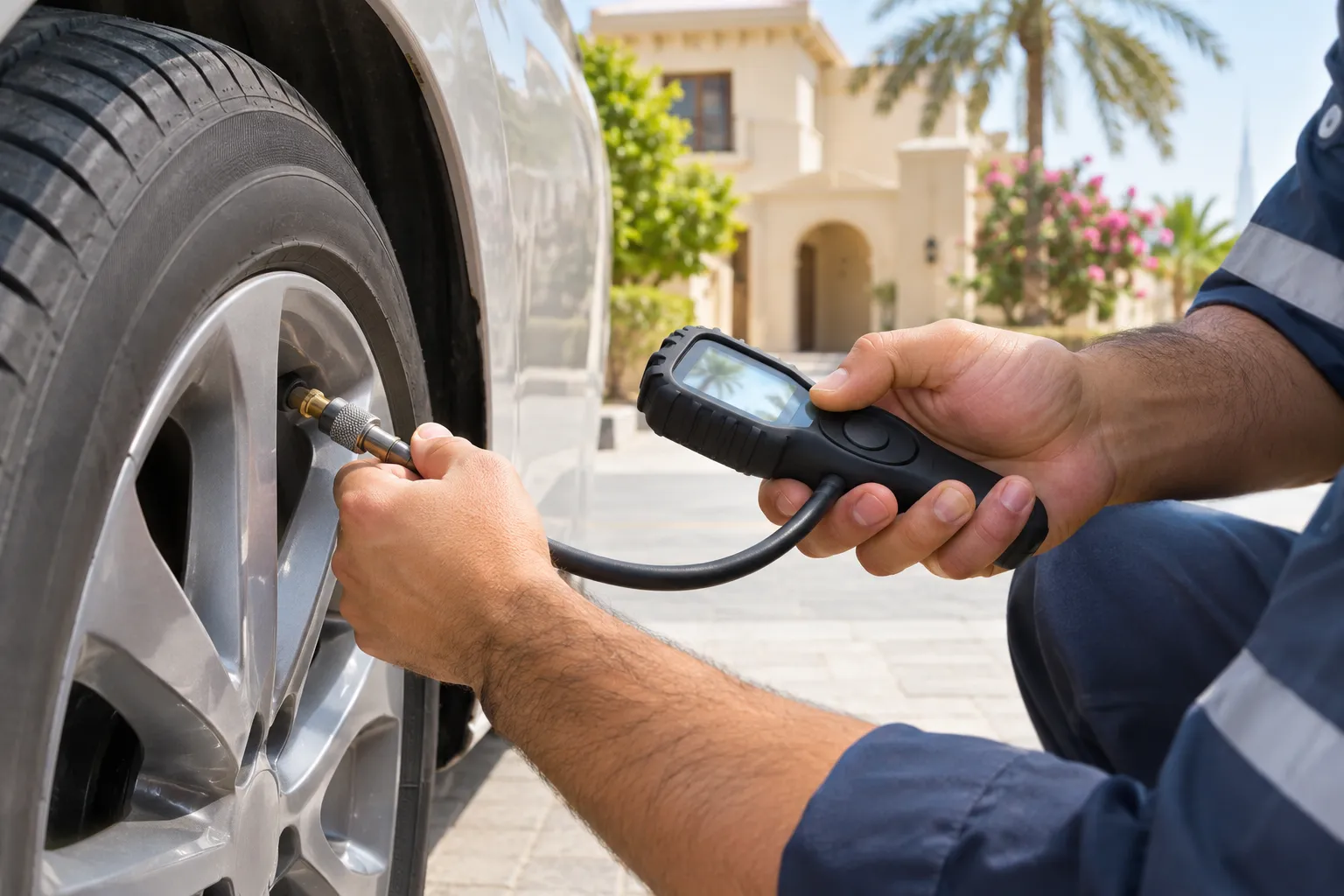
Pressure checks are free at our Al Quoz workshop. We check all four tyres plus the spare, top up to your car's placard figure, and look for anything that explains a tyre that keeps going soft, such as a perished valve or a nail in the tread. If you would rather check at home, the tyre pressure guide explains how to read the placard and use a gauge.
The key is to check when the tyres are cold: before driving, or after the car has been parked in the shade for a few hours. A pressure reading taken after a 30-minute drive on Sheikh Zayed Road can be 3–4 psi higher than the cold figure.
When you need tyre pressure check
- The TPMS warning light is on
- One tyre looks lower than the others
- You have not checked pressure in more than two weeks
- The car feels vague in corners or the ride has become harsh
- Fuel consumption has gone up for no obvious reason
- You are about to make a long drive or load the car heavily
How we do it
- 01
Find the target
We read the recommended pressures from the placard on the driver's door jamb, noting different figures for front and rear or for full load.
- 02
Measure cold
Each tyre is measured with a calibrated digital gauge. If you have just driven, we allow for the warm reading rather than letting air out.
- 03
Adjust
Tyres are topped up or brought down to the correct figure, including the spare.
- 04
Look for leaks
Any tyre noticeably lower than the others is checked for nails, valve leaks and bead leaks.
- 05
Reset TPMS
If your car has indirect TPMS, we reset it after adjustment so the warning works correctly.
What pressure should my tyres be?
The right figure is on the placard inside the driver's door jamb, sometimes inside the fuel filler flap or in the owner's manual. For most sedans it falls between 30 and 36 psi; many SUVs sit between 32 and 38 psi. Some cars list a higher figure for full load or high-speed driving, which is worth using for a fully loaded family trip to Oman.
The number moulded on the tyre sidewall is not your target. That is the maximum the tyre can safely hold, and it is always much higher than what your car needs. Inflating to it makes the car skittish and wears the centre of the tread.
Heat, cold readings and why you should not let air out
Air pressure rises as temperature rises, roughly 1 psi for every 5–6 °C. A tyre set to 33 psi in the morning can read 37 psi after a drive in July. That increase is expected and is built into the placard figure. If you let air out to bring a hot tyre back to 33 psi, it will be underinflated once it cools.
The opposite happens in winter mornings, when tyres can read 2–3 psi lower than in summer. Checking monthly through the year catches both. There is more detail in our guide on tyre pressure in UAE summer.
Sand, desert and towing
Deflating for sand driving is normal and helps the tyre float, but low pressure on tarmac overheats tyres fast. If you have dropped to around 15–18 psi for the dunes, reinflate before driving back on the highway. Towing a boat or caravan usually calls for the higher load pressures on the placard. The tyre care tips page covers both in more depth.
Pressure loss that keeps coming back
All tyres lose a little air over time, about 1 psi a month is normal. A tyre that loses 3–5 psi a week has a leak. The usual causes are a nail in the tread, a cracked valve stem, a leaking valve core, or corrosion on the rim bead. These are easy to find and fix: see tyre valve replacement and puncture repair.
Tyre Pressure Check prices
| Service | Price |
|---|---|
| Tyre pressure check and top-up at workshop | Free |
| Nitrogen top-upFree if fitted with new tyres from us | AED 10 per tyre |
| Valve core or valve replacement if leaking | AED 15–25 |
Prices in AED, including VAT. Final price confirmed before work starts.
Tyre Pressure Check: questions we get asked
What is the correct air pressure for car tyres in the UAE?
Use the figure on your car's door placard, typically 30–36 psi for sedans and 32–38 psi for SUVs. Check it cold, not after driving.
Should I reduce tyre pressure in summer?
No. Set the placard pressure when the tyres are cold. Pressure rises as they warm up, and that is accounted for in the recommendation.
How often should I check tyre pressure?
Every two weeks, and before long trips. In summer, checking weekly is a good habit, along with the spare every couple of months.
Is the tyre pressure check free?
Yes, at our Al Quoz workshop during opening hours, 9:00–19:00.
Why does my TPMS light stay on after I added air?
Some systems need a reset or a short drive to update. If it stays on, a sensor may have failed. See our article on the TPMS warning light.
Is it normal for tyre pressure to go up while driving?
Yes. A rise of 3–4 psi after a long drive in hot weather is normal. A much bigger rise can point to underinflation or a dragging brake.