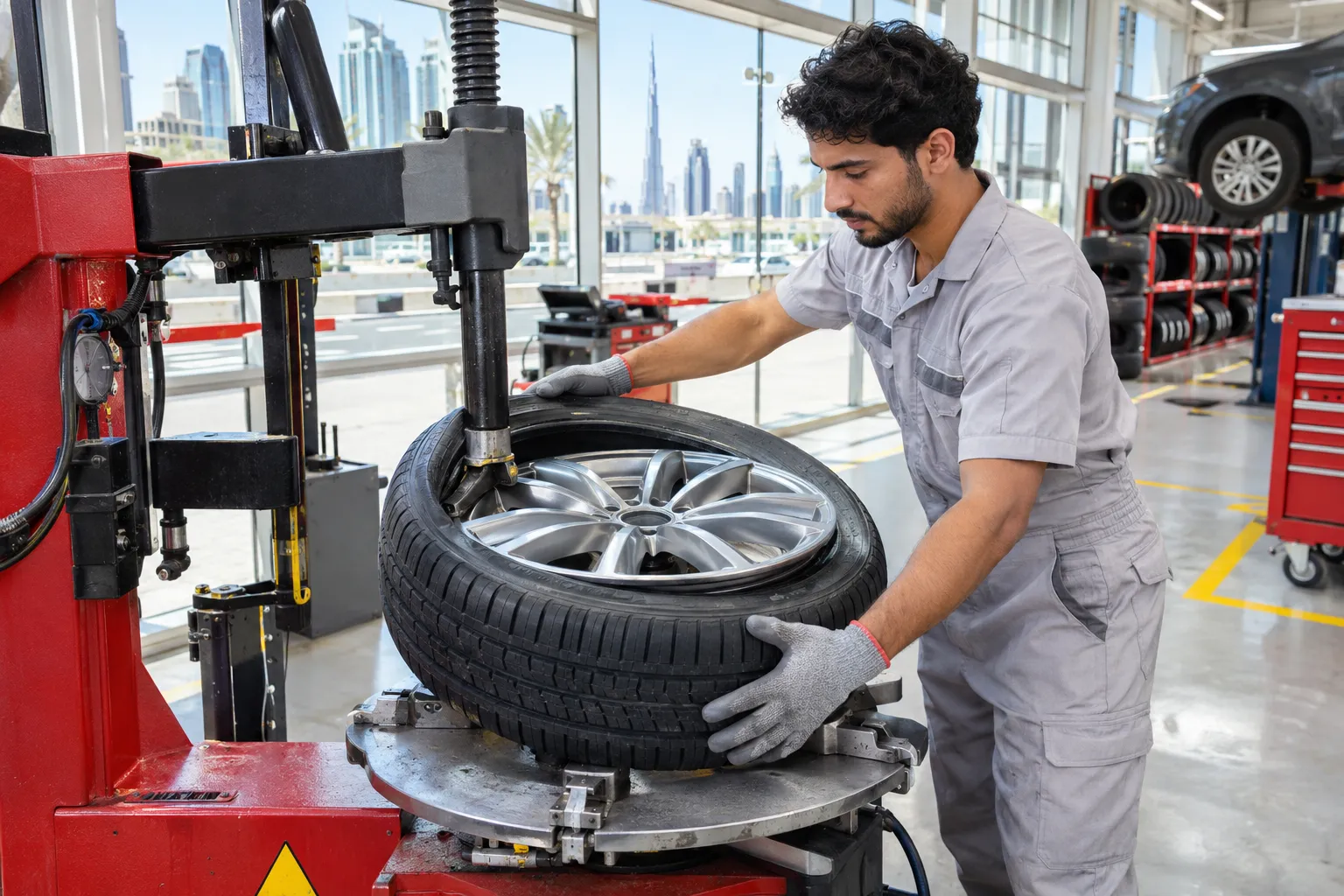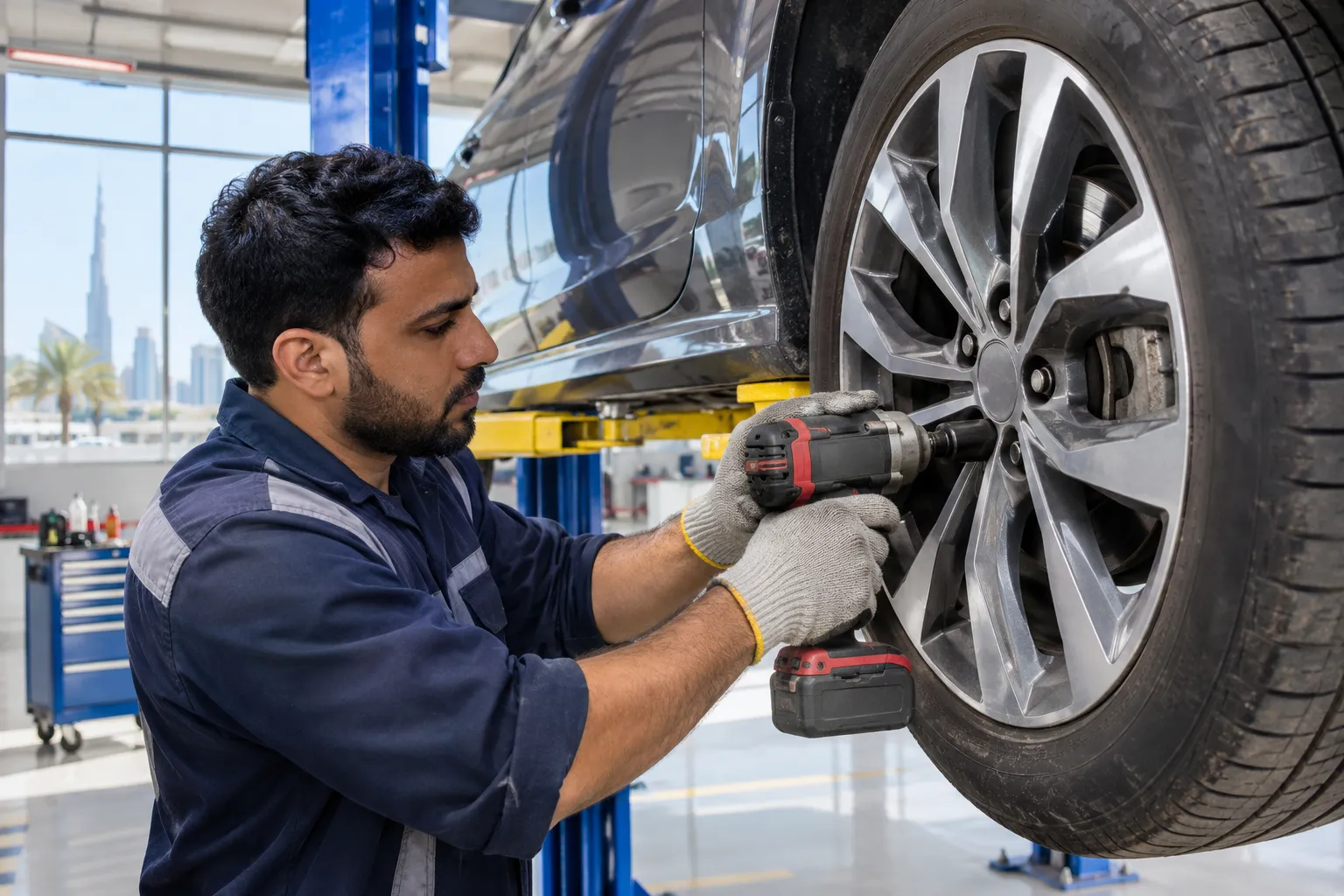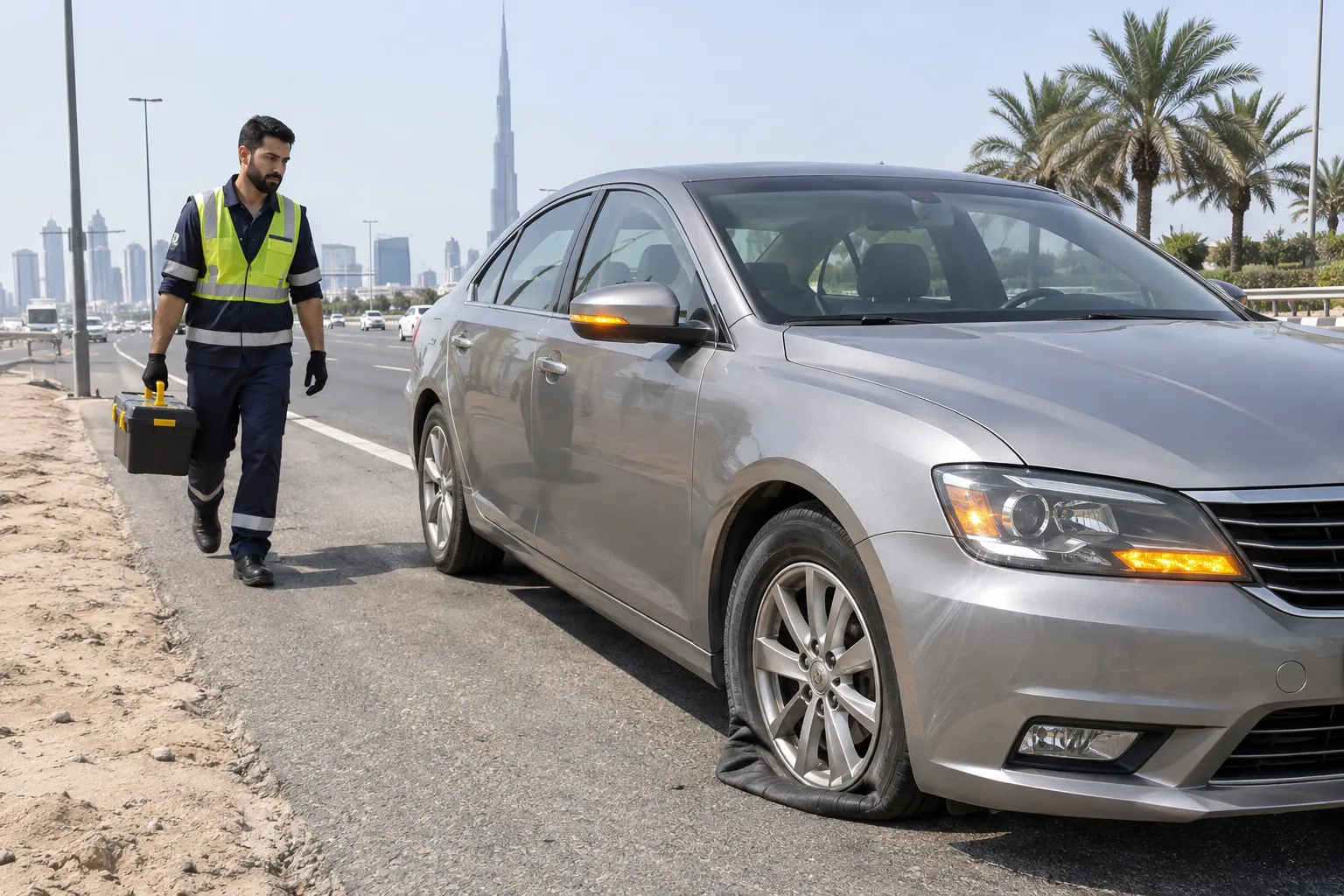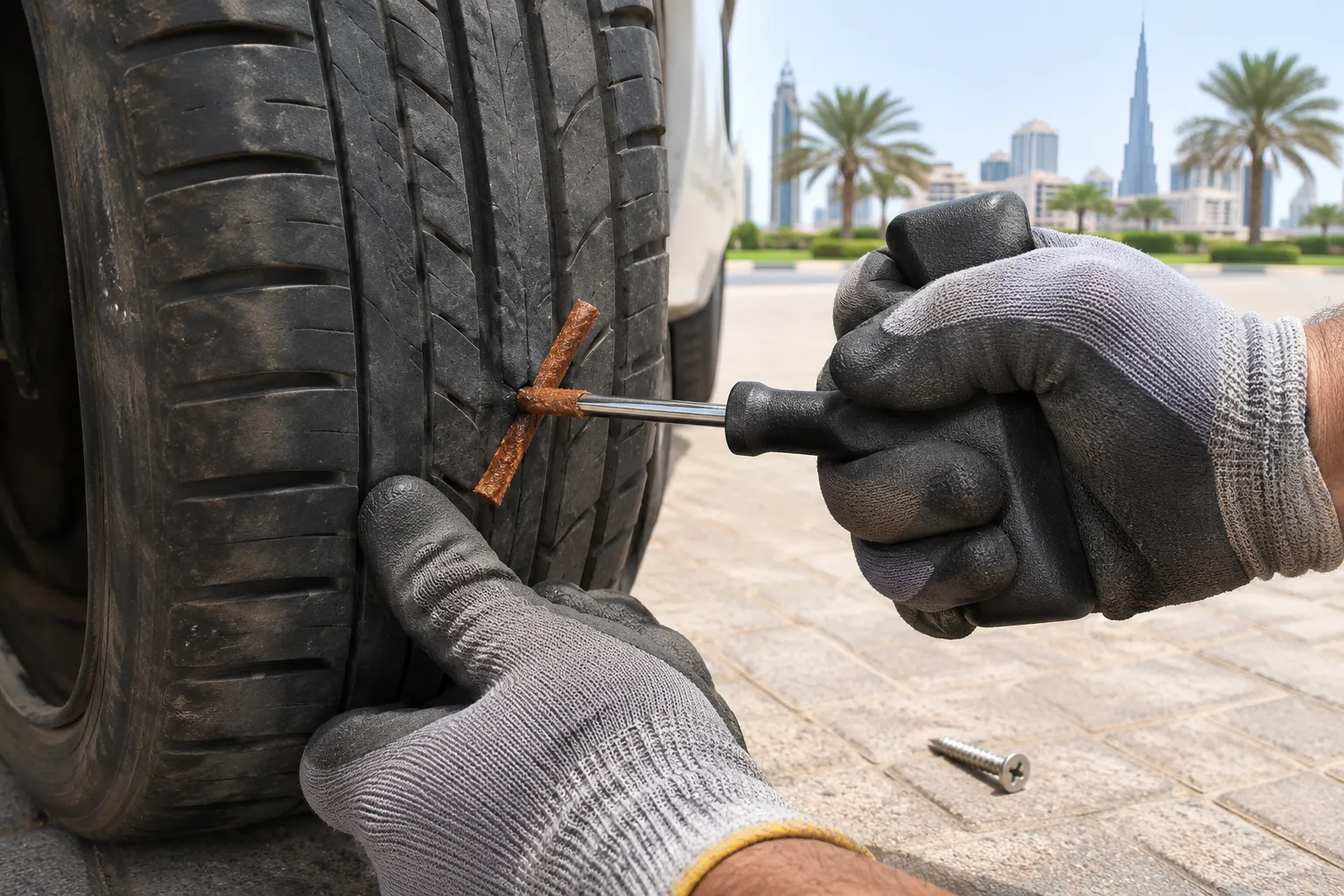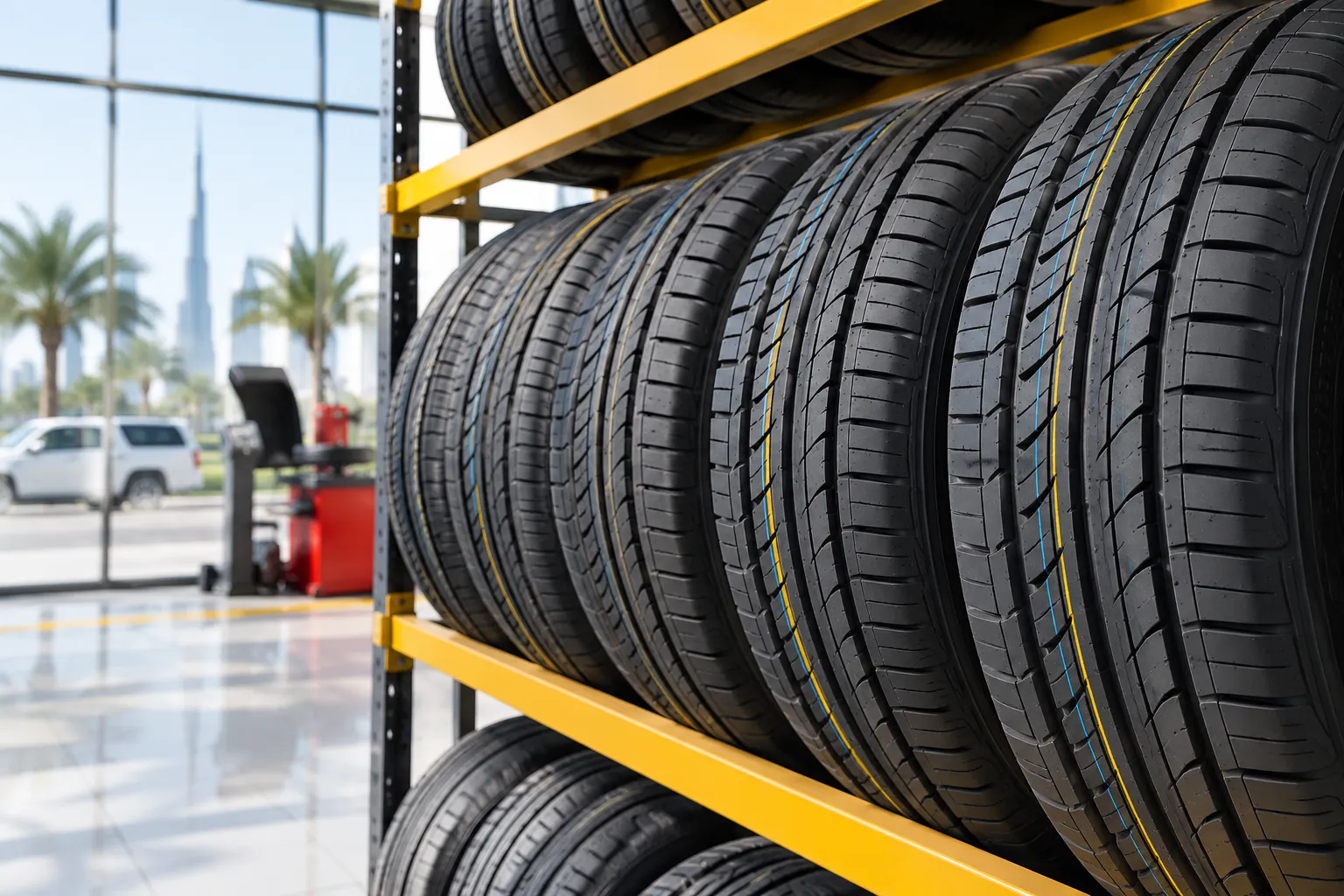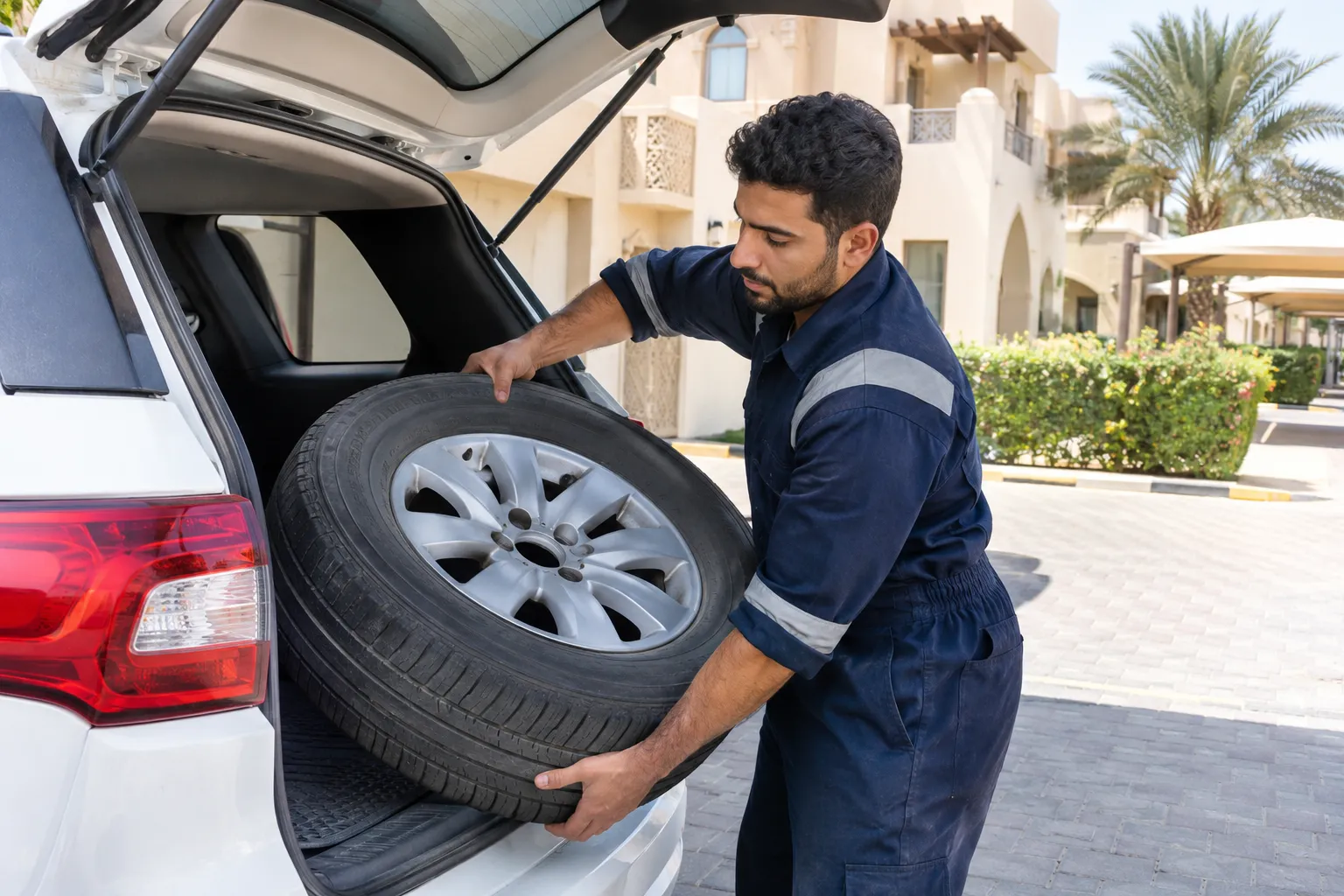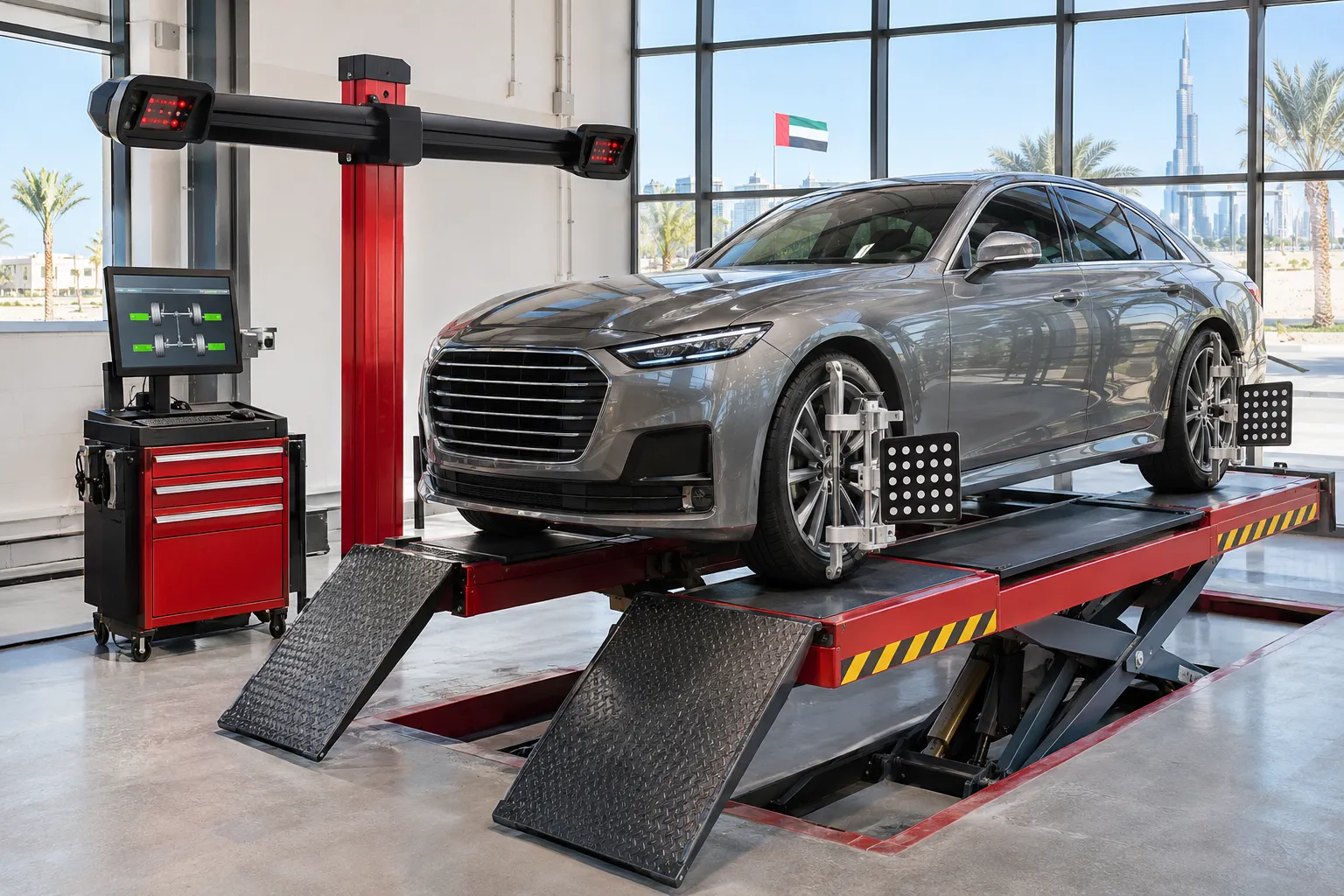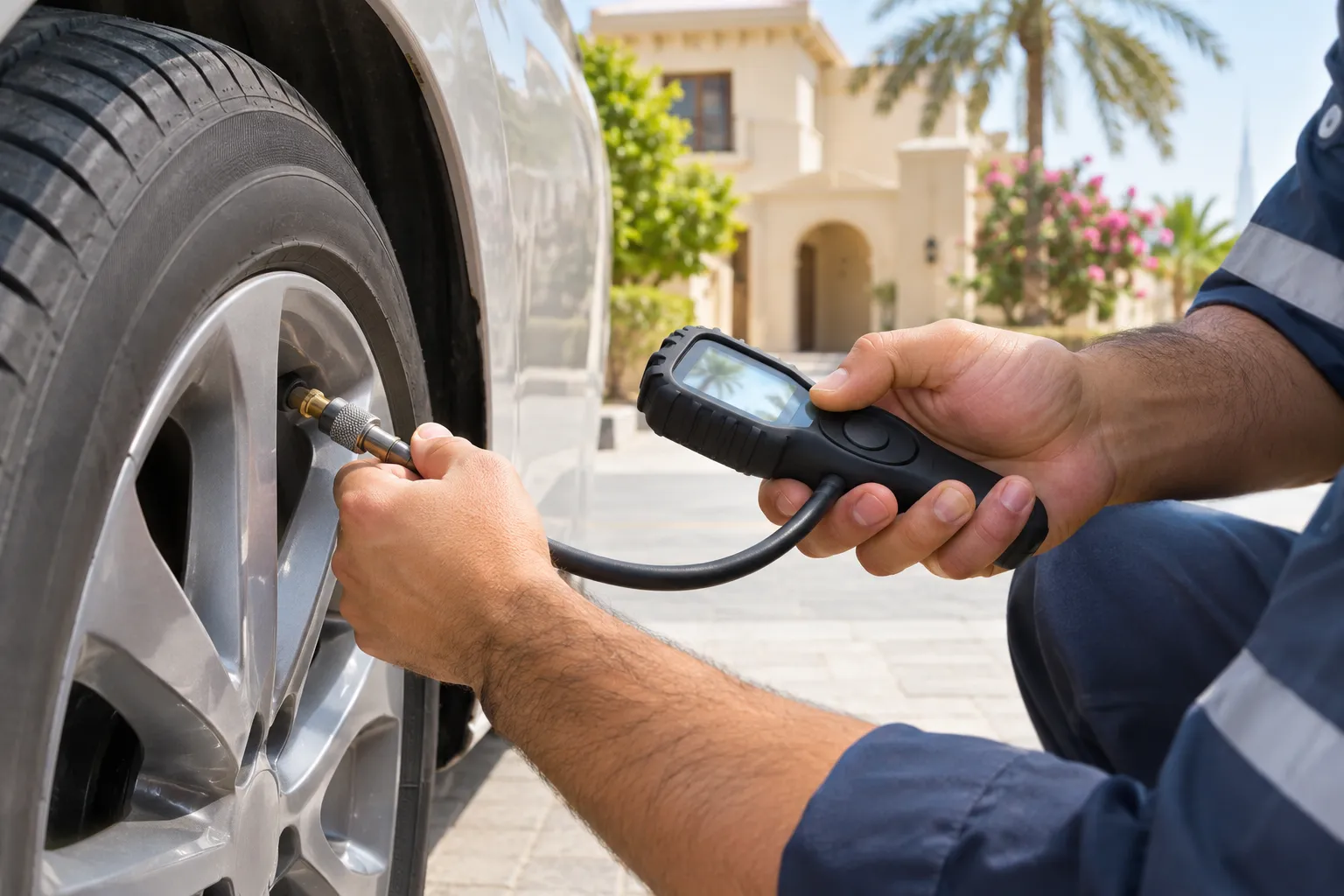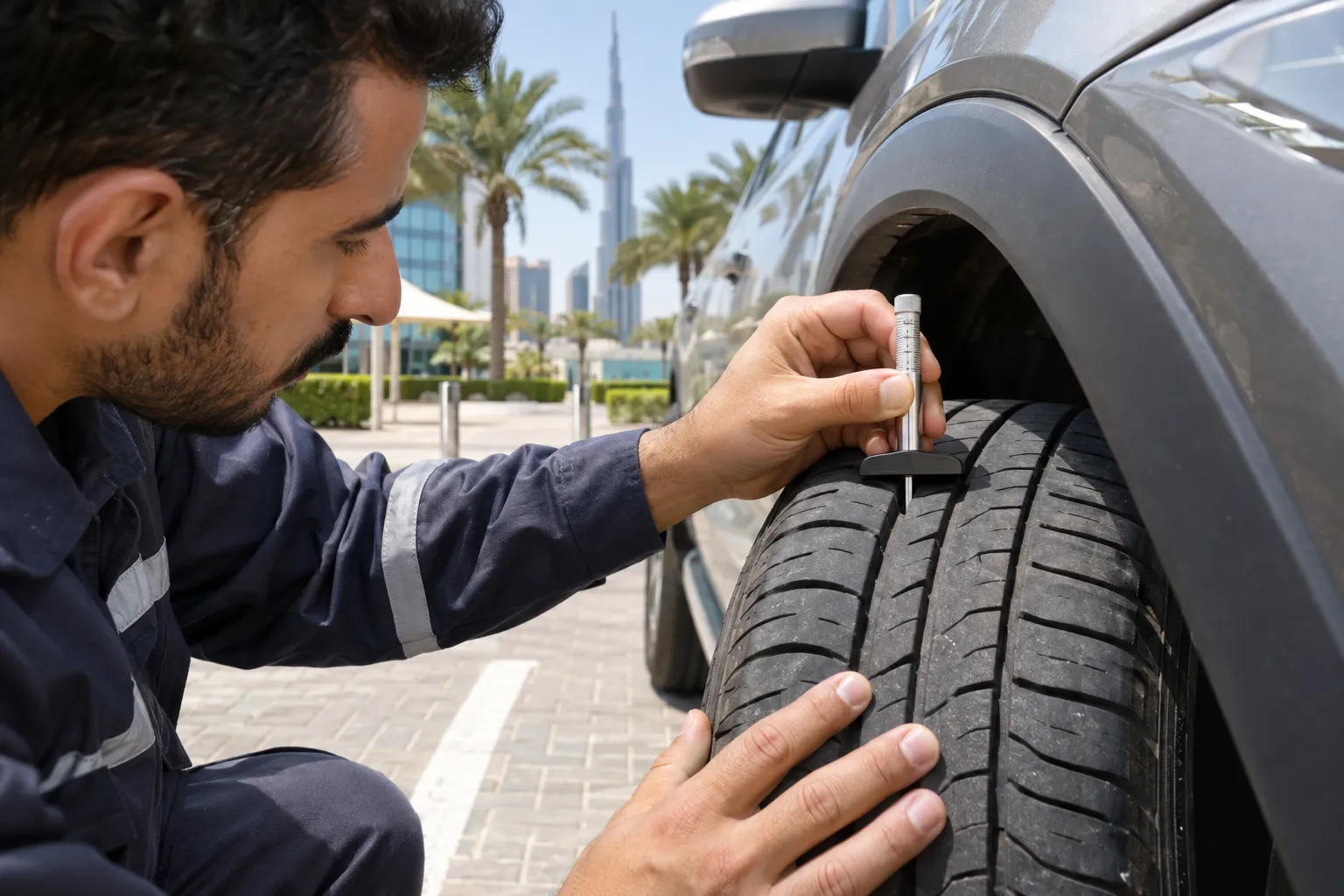
The inspection is free at our Al Quoz workshop. We measure tread depth at several points on each tyre, read the DOT date, check for damage and wear patterns, look at valves and rims, and tell you clearly what needs doing now, what can wait, and what is fine. No pressure to buy anything.
It is a good idea before summer, before a long road trip, before buying a used car, or before your annual registration test. If you want to understand what we look for, the guide to tyre damage causes shows the common problems.
When you need tyre inspection
- You are not sure how old your tyres are
- You are about to drive long distance or tow
- You are buying a used car and want an independent view of the tyres
- The car has a vehicle test or registration renewal soon
- You have noticed new vibration, pulling or noise
- Summer is approaching and the tyres are more than three years old
How we do it
- 01
Tread depth
Measured with a depth gauge at the inner, centre and outer grooves of each tyre.
- 02
Age and markings
DOT code read for manufacture date; size, load index and speed rating checked against the placard.
- 03
Sidewalls and tread
Checked for cracks, bulges, cuts, embedded objects and old repairs.
- 04
Wear patterns
Uneven wear is noted and linked to its likely cause: alignment, pressure, balance or suspension.
- 05
Valves, rims and spare
Valves checked for cracks, rims for damage, and the spare for age and pressure.
- 06
Report
You get a clear verbal summary or written notes of what needs attention and the approximate cost.
Reading wear patterns
The way a tyre wears tells you a lot about the car. Both edges worn usually means underinflation. Centre worn means overinflation. One edge worn points to camber or toe out of alignment. Feathered tread, where the blocks feel sharp one way and smooth the other, is toe misalignment. Cupped or scalloped patches suggest worn shock absorbers or imbalance.
Spotting these early lets you fix the cause before replacing tyres. For example, catching edge wear at 5,000 km and correcting it with a wheel alignment can save the set.
Age, cracks and heat damage
UAE heat is hard on rubber. Fine cracks appear first between tread blocks and on the sidewalls, usually after three or four years. Deep cracks that reach the cords or run around the sidewall mean replacement. The DOT date tells us how old the tyre is; five years is the practical limit we work to here, regardless of tread.
We also check for bulges, which mean the internal structure is broken. These often come from pothole or speed bump impacts. A tyre with a bulge must be replaced. See our article on tyre bulges and sidewall bubbles.
Before buying a used car
Tyres tell you how a car has been looked after. Mismatched brands, very old tyres, or uneven wear suggest neglect or hidden suspension issues. A set of four new tyres can cost several thousand dirhams on an SUV, which is worth factoring into the price. We can inspect the tyres of a car you are considering at the workshop. Our page on UAE tyre rules and fines explains what matters for registration.
Preparing for summer
Most tyre failures we attend happen between June and September. Underinflated, old or damaged tyres are far more likely to fail on 60–70 °C asphalt. A spring inspection, followed by regular pressure checks, is the simplest way to avoid that. Read why tyres burst in summer for more.
Tyre Inspection prices
| Service | Price |
|---|---|
| Tyre inspection at workshop | Free |
| Inspection during a mobile visit | Included with any call-out |
| Pressure check and top-up | Free |
Prices in AED, including VAT. Final price confirmed before work starts.
Tyre Inspection: questions we get asked
Is the tyre inspection really free?
Yes, at our Al Quoz workshop. We tell you what we find and what it would cost to fix, without obligation.
How do I check tyre tread depth myself?
Look at the small raised bars inside the main grooves. If the tread is level with them, it is at 1.6 mm and needs replacing. A cheap depth gauge gives an exact reading.
How do I check the age of my tyres?
Find the DOT code on the sidewall. The last four digits show the week and year of manufacture, for example 1522 means week 15 of 2022.
What causes tyre sidewall cracks?
Heat, UV light and age. Cracks that are shallow and fine are an early warning; deep cracks mean the tyre should be replaced.
Should I get my tyres inspected before summer?
Yes. Summer heat is when old, damaged or underinflated tyres are most likely to fail. A spring check is the easiest prevention.
Can you inspect tyres at my home?
Yes, as part of any mobile visit. A standalone inspection is best done at the workshop where it is free.