Puncture & Repair
Tyre Bulge or Sidewall Bubble: Is It Safe to Drive?
A bubble on your tyre sidewall means broken internal cords. Learn why bulges happen, why they can't be repaired, and how far you can safely drive on one.
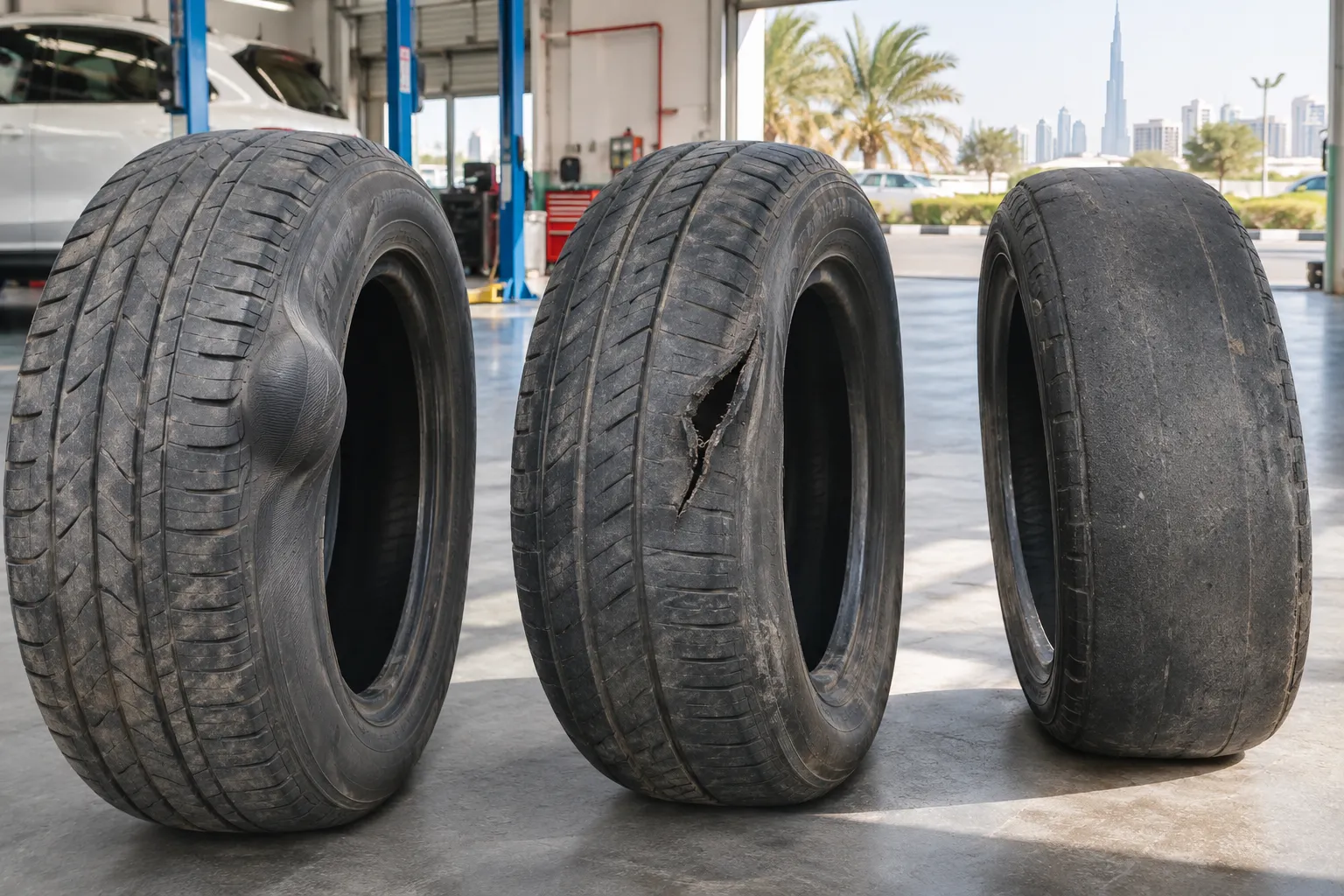
A bulge or bubble on a tyre’s sidewall means the internal cords have broken and air is pushing the outer rubber outward. It’s not safe to drive on and it can’t be repaired. The tyre needs replacing. Fit your spare or drive slowly and briefly to a tyre shop, because a bulged tyre can burst without warning, especially at highway speed in the heat.
Key takeaways
- A bulge is structural damage, not a cosmetic mark. Only replacement fixes it.
- The most common cause is a hard impact: kerbs, potholes, speed bumps taken fast, or road debris.
- Low-profile tyres and under-inflated tyres bulge more easily.
- Small inward dents along the sidewall are often normal; outward bubbles are not.
What’s actually happening inside the tyre
A tyre isn’t just rubber. Under the sidewall there are layers of fabric cords, usually polyester or rayon, running from bead to bead. These plies carry the load and hold the tyre’s shape against the air pressure.
When the tyre is hit hard enough, for example by being pinched between a kerb and the rim, some of those cords snap. The rubber on the outside is still intact, so air doesn’t escape. It does push into the weak spot, inflating the outer layer like a blister. That blister is the bubble you see.
The problem is that the rubber over the bubble was never designed to hold pressure on its own. Add heat, speed and the constant flexing of a rolling tyre and it can tear open in a fraction of a second.
Bulge, dent or crack? Know the difference
Not every mark on a sidewall is a bulge. Before you panic, compare what you see:
| What you see | What it usually is | Safe to drive? |
|---|---|---|
| Outward bubble, rounded, firm to touch | Broken internal cords (true bulge) | No. Replace the tyre |
| Shallow inward dip or ripple, often several around the tyre | Overlap joint in the cord layers from manufacturing | Generally yes, it’s normal |
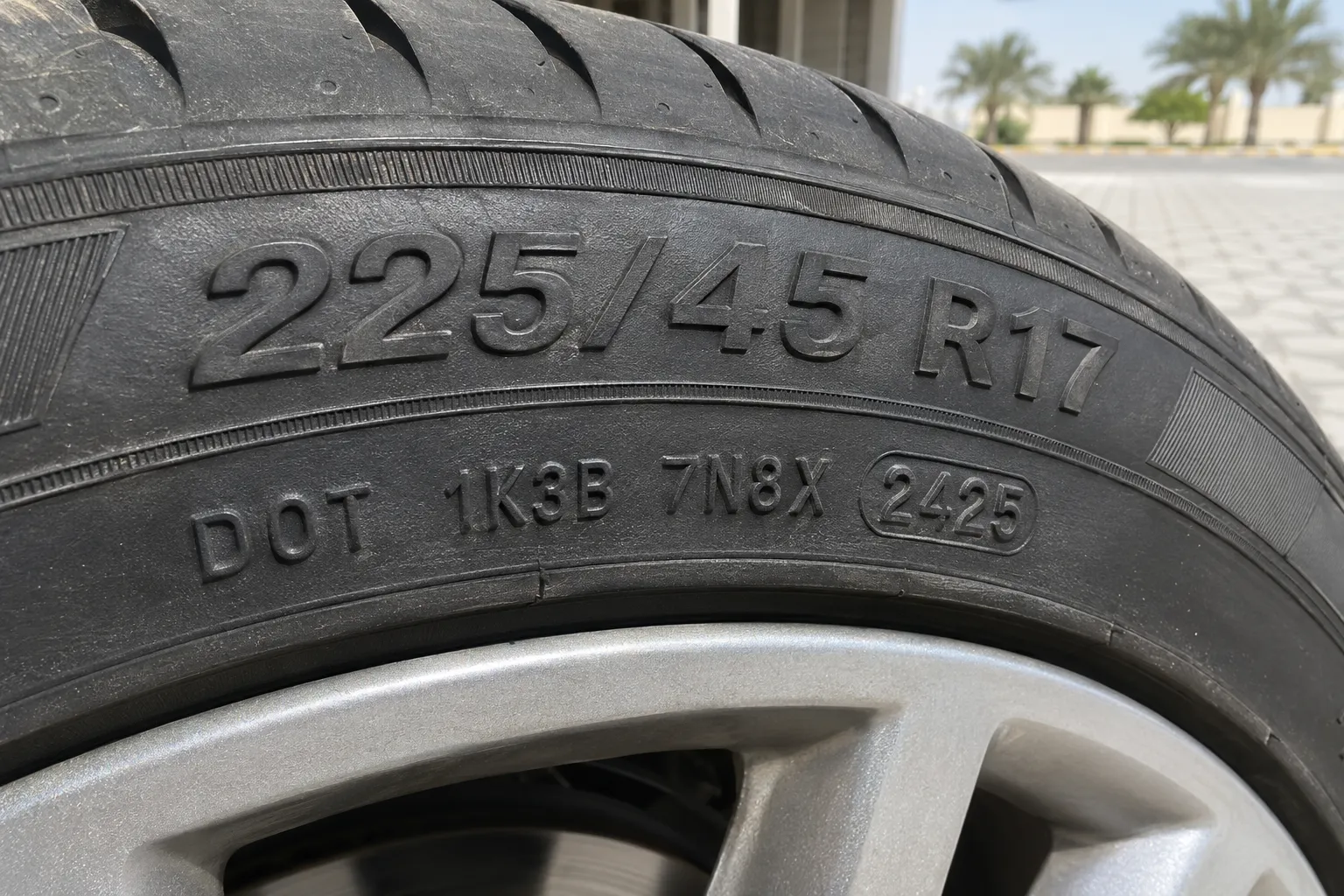
| Fine surface cracks around the sidewall | Age and UV ageing (“weather cracking”) | Check the DOT date; deep cracks mean replace |
| Cut or gouge with cords visible | Impact or debris damage | No. Replace |
| Scuff marks from kerb contact | Cosmetic, if no bulge or cut | Usually yes, but have it inspected |
The inward dips confuse a lot of drivers. Several customers have called us in a panic about “dents” that turned out to be completely normal ply joints. A bubble that sticks out is the one to worry about.
Why bulges are so common in the UAE
I see more sidewall bubbles in Dubai than I’d expect from road quality alone. The reasons:
- Speed bumps taken too fast. Residential communities in JVC, Al Barsha and Mirdif have steep bumps, and a lot of drivers hit them at 40 km/h.
- Basement ramps and tight kerbs. Mall car parks and building basements have sharp-edged kerbs right where you turn.
- Low-profile tyres. A 35-series tyre on a 20-inch rim has very little rubber between the rim and the road.
- Under-inflation in summer. A soft tyre is pinched more easily against the rim on impact. People also let air out of hot tyres thinking they’re over-inflated. See our summer tyre pressure guide for why that’s a mistake.
- Desert driving. Aired-down tyres flex hard, and hitting a rock or a buried kerb at the edge of a sand track can break the cords.
- Road debris on highways, especially metal and lorry-tyre fragments.
Most of the time, the bulge appears a few hours or days after the impact, not immediately. If you’ve hit something hard, check the sidewalls the next morning.
Why a bulge can’t be repaired
People ask me to “just patch it” almost every time. Here’s why I won’t:
- A plug or patch seals a hole. A bulge has no hole; the damage is in the structure.
- The sidewall flexes much more than the tread. Even proper puncture repairs are not allowed in the sidewall or shoulder area by industry standards.
- No sealant or inner patch can replace broken cords.
Our article on whether a punctured tyre can be repaired explains the repairable zone in the centre of the tread. Anything outside it, including all sidewall damage, means a new tyre.
How far can you drive on a bulge?
There’s no safe number. What I tell customers:
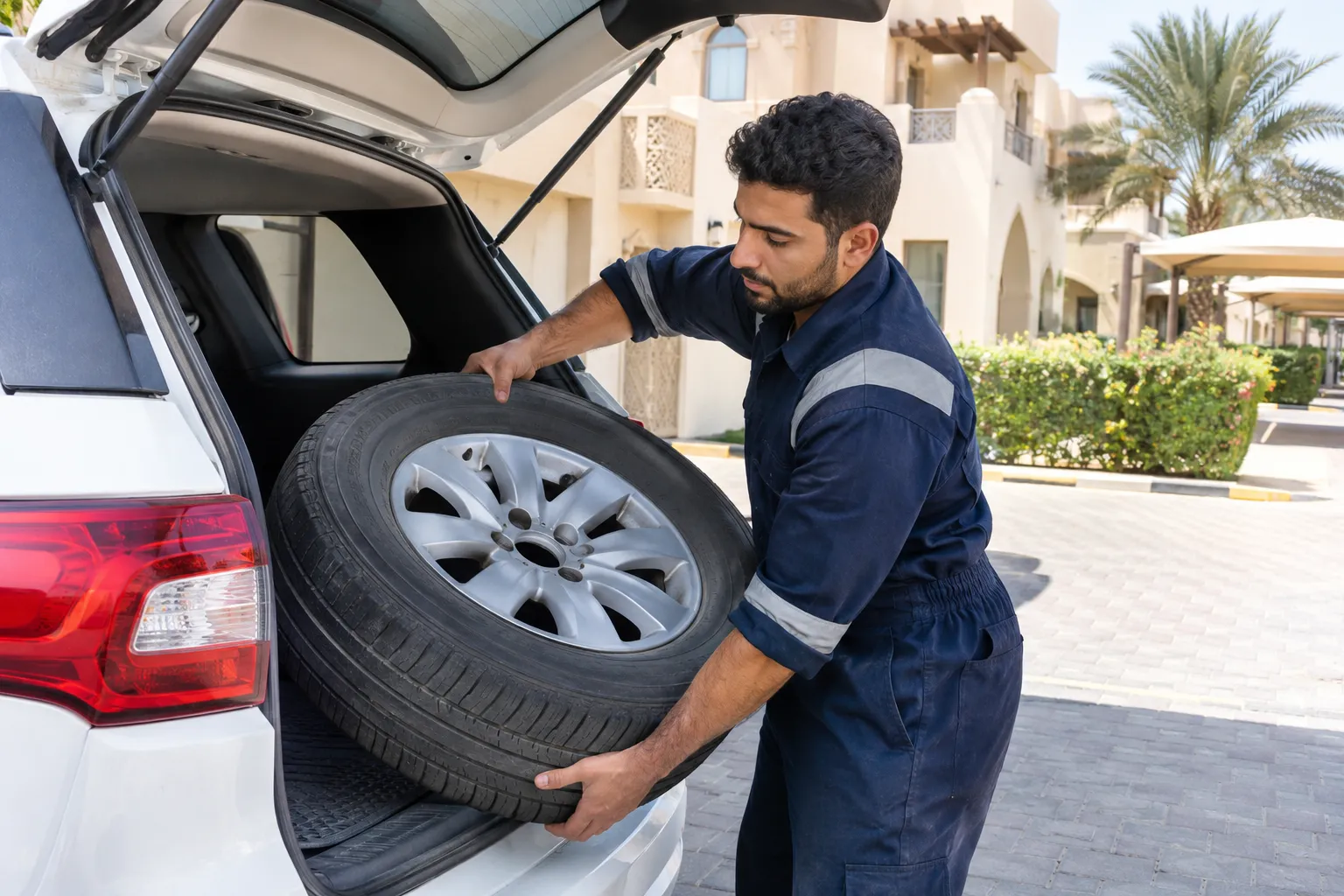
- If you have a spare, fit it now. The steps for changing a tyre take about 15 minutes.
- If you don’t, drive directly to a tyre shop, under 60 km/h, avoiding highways, with nobody sitting near the damaged corner if you can help it.
- Don’t do a highway run in the afternoon heat on it, carry a full load, or put it off “until the weekend.”
Last summer I replaced a bulged front tyre on a crossover in Al Barsha in the morning. The driver had noticed the bubble two weeks earlier and kept driving to work on Al Khail Road. When I took the tyre off, the inner sidewall had a crack about 6 cm long. It was a matter of days.
What we check when you bring in a bulged tyre
When a customer calls us about a bubble, the job isn’t just swapping the tyre. Whatever hit the tyre hard enough to break its cords also hit the wheel and suspension. Here’s what I go through:
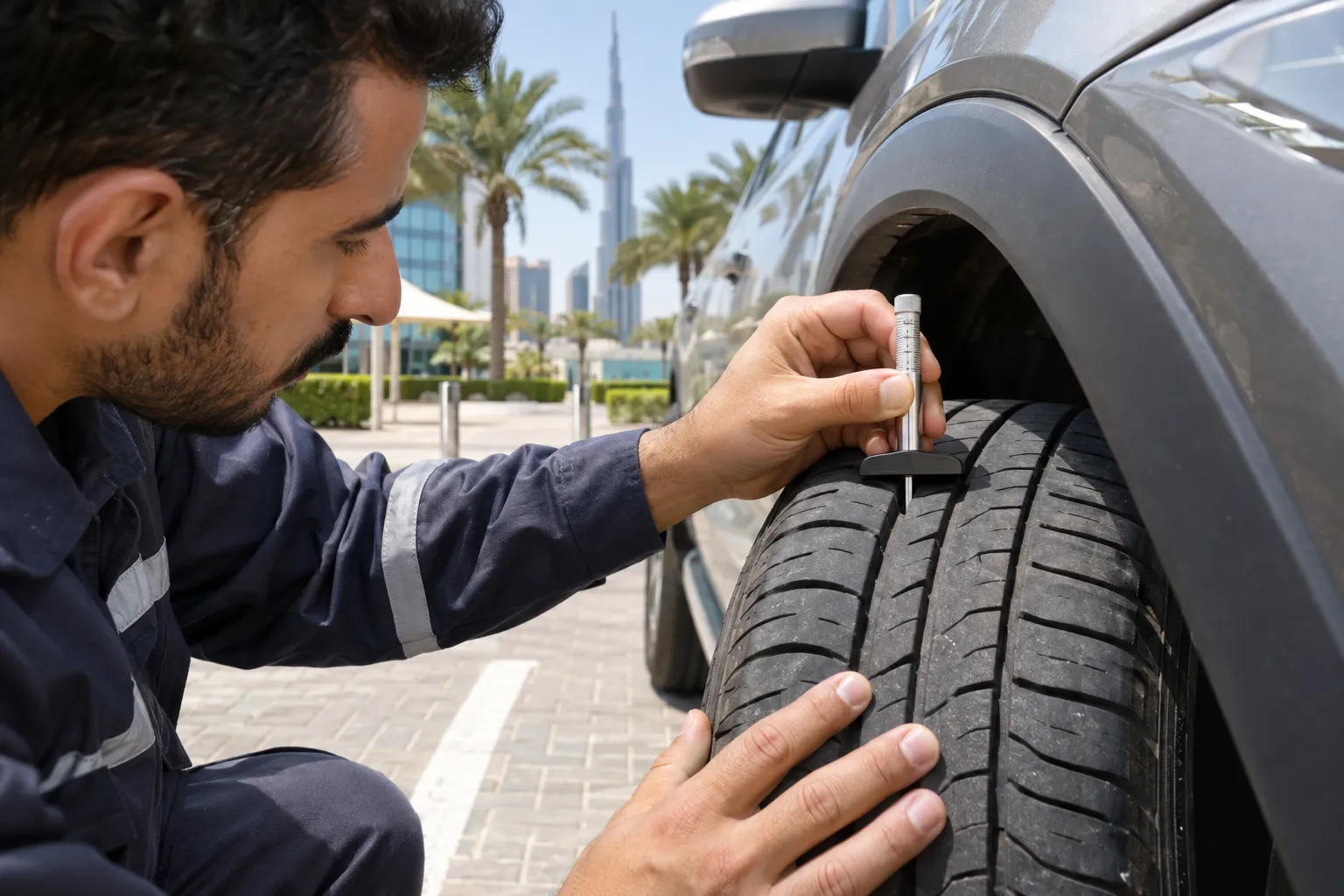
- Confirm it’s a true bulge, not a normal ply-joint dip. I compare both sidewalls and press the spot.
- Remove the tyre and inspect the inside. Often there’s an inner crack or a crease that’s worse than the outside suggests.
- Check the rim for bends, cracks or a flattened lip. A bent lip causes slow leaks on the new tyre.
- Check the tyre on the other side of the axle. Same pothole, sometimes the same damage.
- Look at the DOT dates and tread on the remaining tyres so the replacement matches sensibly.
- Fit and balance the new tyre, set pressures cold, and check the TPMS sensor if your car has one.
- Recommend an alignment check if the steering wheel is now off-centre or the car pulls.
That last step matters. In my experience, roughly one in three cars that come in with an impact bulge also has its alignment knocked out. An alignment and balancing package after replacing the tyre protects your new rubber from uneven wear.
Is it covered by warranty or insurance?
Manufacturers usually treat bulges as impact damage, which isn’t covered. There are exceptions:
- A bulge on a nearly new tyre with no impact history may be a manufacturing fault. Keep the receipt and ask the seller to send it for inspection.
- Some comprehensive car insurance policies and dealer tyre-protection plans cover road hazard damage. Check your policy wording.
What to replace it with
Ideally fit the same brand, model and size as the tyre on the other side of the axle. If that tyre is more than about 2–3 mm more worn than the new one, replace both for even handling. You’ll find options across all budgets on our new tyres service page, and if your car runs low-profile performance rubber, a tyre with a stronger sidewall from the same size range may be worth asking about.
After an impact strong enough to bulge a tyre, also get the rim and alignment checked. A bent rim causes slow leaks and vibration; a knocked-out alignment wears the new tyre unevenly. Our rim repair service can straighten many bent alloys for AED 200–450.
How to prevent sidewall bubbles
- Keep correct pressure, checked cold, at least monthly. Use the door-jamb placard figure.
- Slow right down for speed bumps and cross them square-on, not at an angle.
- Approach kerbs slowly when parking and avoid scraping the sidewall along them.
- Steer around potholes when it’s safe, or slow down before them. Don’t brake while you’re in one.
- Choose the right tyre for how you drive; if you constantly park in tight basements, a slightly taller profile is more forgiving.
- Re-inflate after desert driving before getting back on tarmac.
- Inspect sidewalls every couple of weeks when you check pressure. Run your eyes around both sides; the inner side is easy to miss.
More causes of damage, from heat cracking to uneven wear, are in our tyre damage guide.
Getting a bulged tyre replaced
If you’ve found a bubble, don’t wait. Send us a photo of the tyre sidewall showing the size, and we’ll bring a matching new tyre to you, fit and balance it on the spot, and check the rim while it’s off. Our tyre inspection is also worth booking after any hard impact, even if you can’t see damage yet.
Frequently asked questions
Can a tyre sidewall bubble be repaired?
No. A bulge means the cords inside the tyre's casing are broken. Plugs, patches and sealants cannot rebuild that structure, so the only safe fix is replacing the tyre.
How long can I drive with a bubble in my tyre?
Only as far as you need to get it replaced, ideally less than a few kilometres at low speed. Fit the spare if you can. A bulged tyre can fail at any time, and the risk rises sharply with speed, heat and load.
Is a tyre bulge covered by warranty?
Usually not, because most bulges are caused by impact damage such as potholes or kerbs. A bulge on a very new tyre with no impact history may be a manufacturing defect, so keep your receipt and ask the seller to inspect it.
Do I need to replace both tyres if one has a bulge?
Not always. If the other tyre on the same axle is fairly new and the same model, replacing one is fine. If it is worn by more than about 2–3 mm compared with the new one, replacing both keeps the handling balanced.
About the author
Fazir Kamal — Fazir Kamal is a tyre technician with five years of hands-on work on UAE roads — roadside punctures on Sheikh Zayed Road at 2 a.m., run-flat fitments in DIFC basements, alignment on desert-driven Patrols. He writes and reviews the technical guides on TyrePuncture.ae.